


 Organic Baby Formula Original
 Follow-On Milk 6+
 Follow-on milk
 Organic Infant Formula from Whole Milk
 Follow-on Milk
 Organic Infant Formula from Goat's Milk
 Follow-On Milk
 Organic Bone Broth
 Beef
 For Moms
 Organic Energy Balls


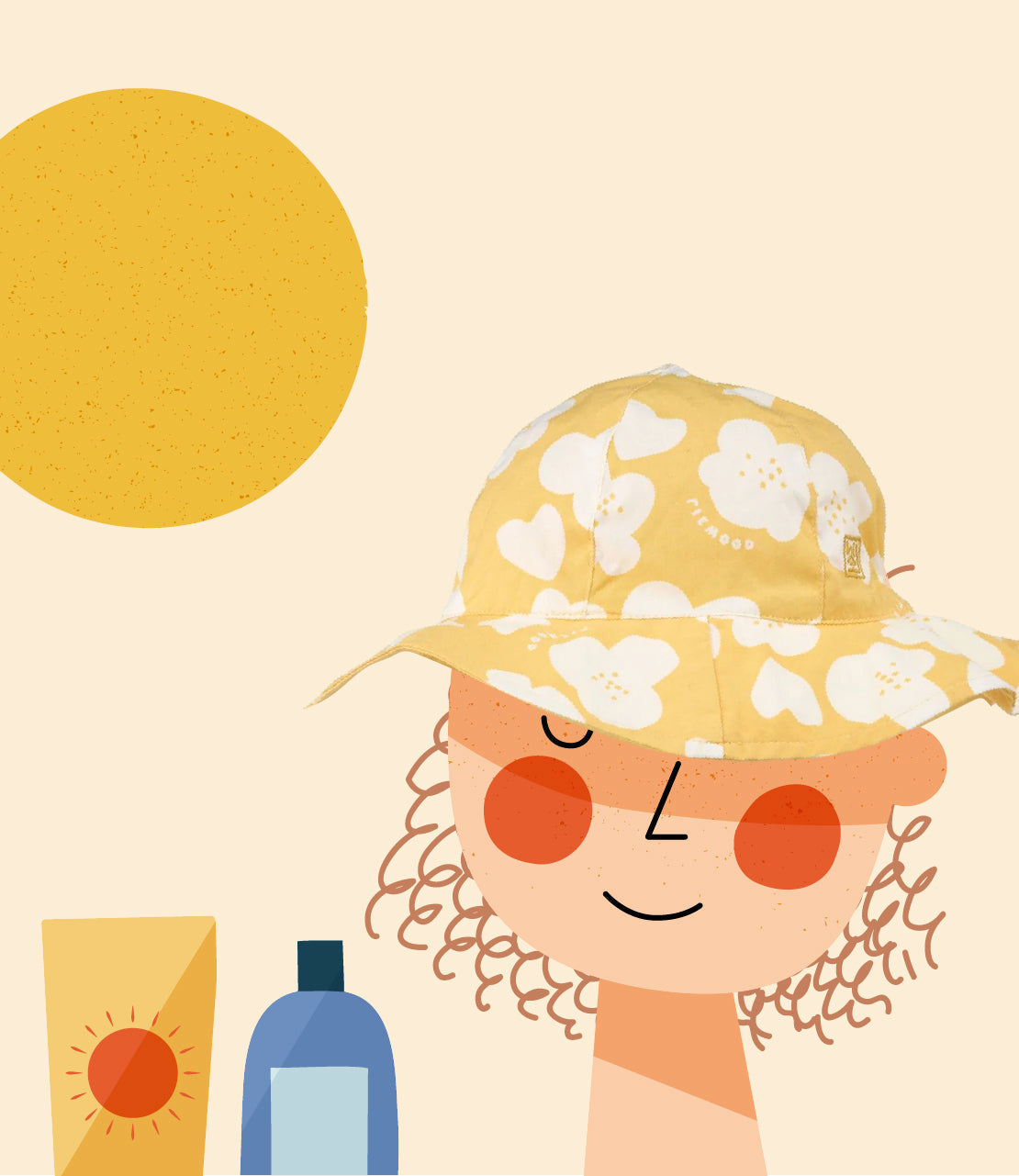
Sun protection for babies: What really protects and what doesn't
Summer, sunshine, baby skin – and many unanswered questions: Does my baby need sunscreen? Is a parasol over the stroller enough? And why can an apparently harmless cloth even become dangerous?
Baby skin is particularly sensitive and therefore needs sun protection that is really suited to their age and the respective situation.
In this post, you will learn what to look for when it comes to UV protective clothing and sunscreen. We will also explain why shade and clothing remain the most important line of defense. We will also show you how to avoid overheating in the stroller, what role the UV index plays, and which warning signs you should pay attention to.
This way, you can relax and enjoy the warm days with your little cub – well-informed, attentive, and without unnecessary worries.
1. Why baby skin needs special sun protection
Baby skin is not just miniature adult skin. It is thinner, produces fewer protective melanin pigments, and can barely fend off UV rays on its own. At the same time, the body surface area relative to body weight is significantly larger – this means: babies absorb substances from creams and the environment much more intensively than we do.
In addition: Sunburn in infancy is proven to increase the later risk of skin cancer – this is supported by studies from the World Health Organization (WHO) and the German Federal Institute for Risk Assessment (BfR). No reason to panic, but a very good reason to take a closer look.
2. Sun protection for babies: What really helps at what age
2.1 0–6 Months: No Cream – But Maximum Protection Through Shade & Clothing
This may sound surprising at first, but it is the clear consensus of pediatricians, the German Federal Institute for Risk Assessment (BfR), and the German Society for Child and Adolescent Medicine (DGKJ): Babies under 6 months should generally not be put on sunscreen.
Why? At this age, the skin is so permeable that chemical and even many mineral filter ingredients can penetrate the body – with possible unknown long-term consequences. In addition, there is still insufficient data on safety and tolerability for newborns.
What really protects instead:
-
Consistently avoid direct sunlight – especially between 11 a.m. and 3 p.m.
-
Seek shade – under trees, awnings, or a sun sail
-
Full-body clothing – lightweight long-sleeved shirts, trousers, sun hat with neck protection
-
No sunscreen – also no "natural" or "organic" version without consulting a doctor
Tip: Talk to your pediatrician at your next check-up if you are unsure. Especially in the first few months, individual advice is worth its weight in gold.
2.2 From 6 Months: Sunscreen – but the Right One
From the 6th month of life, you can carefully start using sunscreen – but not just any. Applying sunscreen to your baby in the first year means: exclusively mineral UV filters, SPF 50+, fragrance-free, alcohol-free, nanoparticle-free.
What to look for when buying:

Important: Even the best sunscreen is no substitute for protective clothing. It is always only a supplementary measure – never the first line of defense.
3. UV protective clothing for babies: The underrated hero
UV protective clothing with UPF 50+ is the most effective sun protection you can use for your baby – and without any sunscreen. UPF stands for "Ultraviolet Protection Factor" and indicates how much UV radiation penetrates the fabric. At UPF 50+, this is less than 2%.
Brands like Hyphen Sports (as an example) offer UV protective clothing specially developed for babies and toddlers with UPF up to 80 – lightweight, breathable, and yet fully protective. When buying, pay attention to:
-
Certification according to EN 13758-2 (European standard for UV protective clothing)
-
Light or dark colors – both can achieve UPF 50+, the deciding factor is the fabric density
-
Long sleeves + leg protection for maximum coverage
-
Sun hat with neck protection – the neck is one of the most frequently forgotten areas
4. Sun protection in the stroller/baby carrier: What helps – and what is dangerous
4.1 UV Cloths: Yes – but NEVER cover airtight
UV protection covers with UPF 50+ can protect strollers and children in carriers from direct sunlight. Sounds practical – and it is, as long as you follow a crucial safety guideline:
IMPORTANT SAFETY NOTE: Never cover a stroller completely and airtight with a cloth – not even with a UV protection cover! Studies show that dangerous heat can build up underneath within just a few minutes. The temperature inside can rise to over 34°C (93°F) – a life-threatening risk for babies who cannot yet regulate their body temperature.
How to use UV covers safely:
-
Secure the cloth loosely and leave enough space for air to circulate
-
Never cover all sides at the same time
-
Check on the baby regularly and monitor the temperature
4.2 Parasol on the Stroller: The Safer Alternative
A parasol attached directly to the stroller, ideally with UPF 50+ and adjustable, is the much safer solution. It blocks direct sunlight without obstructing airflow. Look for:
-
A flexible swivel arm so you can adjust the parasol to follow the sun
-
UPF 50+ certification of the parasol fabric
-
Secure attachment that holds even in the wind
4.3 Sun Visors & Baby Seat: Caution with Netting!
Many baby carriers and strollers have integrated sun canopies or mesh inserts. Here, caution is advised:
Important: The mesh insert of a baby carrier or stroller generally does not provide sufficient UV protection – even if it visually appears to be a cover. Mesh allows UV radiation to pass through almost unhindered. Do not rely on this perceived protection.
Instead, check whether your sun canopy is explicitly rated with a UPF value – and if in doubt, supplement it with protective clothing or a certified parasol.
4.4 Naturkind Sunshade: Clever Side Protection
The Naturkind sunshade (as a reference) is another option for parents looking for side UV protection: It can be flexibly attached to the stroller, is breathable, and offers UPF 50+. Particularly convenient: It can also be attached to the side when the sun shines at an angle – a situation that classic umbrellas often do not cover.
In summary:

5. Further tips: How to protect your baby holistically
-
UV radiation is strongest between 11 a.m. and 3 p.m. – during this time, stay indoors or deep in the shade as much as possible
-
The free app of the German Meteorological Service (DWD) shows the current daily UV index. Protection is necessary from UV index 3 – from 6 it is mandatory for babies
-
A hat with a wide brim and neck protection is mandatory – even in the shade, if reflections from sand or water are possible
-
Breastfed babies need more frequent feeding meals in the heat. Bottle-fed children can additionally be offered water (from 6 months)
-
Red skin, restlessness, sleepiness or a hot forehead can be signs of overheating – immediately go into the shade, cool down and seek medical advice

6. Conclusion: Sun protection for babies is easier than you think
You don’t need to be an expert to keep your baby safe through the summer. The most important message: shade and clothing offer better protection than any cream – especially during the first six months. And from 6 months on: mineral-based, SPF 50+, no-nonsense.
At Löwenzahn Organics, we believe that being a good parent doesn’t mean doing everything perfectly – it means making informed decisions. If you have any questions, your pediatrician should always be your first point of contact.
Enjoy the summer with your little Löwenkind – safe, relaxed, and full of sunshine.

Sources
-
German Federal Institute for Risk Assessment (BfR): Recommendations on sun protection for infants and young children. bfr.bund.de
-
World Health Organization (WHO): Ultraviolet radiation and the INTERSUN Programme. who.int/uv
-
German Society for Child and Adolescent Medicine (DGKJ): Statement on UV protection in childhood. dgkj.de
-
Stiftung Warentest: Children's sunscreens tested (current issue).
-
German Meteorological Service (DWD): UV index information and app. dwd.de
Related Articles

Sun protection for babies: What really protects and what doesn't
1. Why baby skin needs special sun protection Baby skin is not just small adult skin. It is thinner, produces fewer protective melanin pigments, and can hardly repel UV rays on its own. At the same...
Our Quality: A Truly Personal Matter
Behind the scenes at Löwenzahn Organics: Why the highest possible quality in baby food is so important. Ultimately, it’s about trust.

Authentic and Unforced: Why We Need to Rethink Baby Food
Löwenzahn Organics combines organic tradition with the aim of redefining infant nutrition through the vision and passion of Eva Neugebauer and David Rau.


