Organic Baby Formula Original
 Follow-On Milk 6+
 Follow-on milk
 Organic Infant Formula from Whole Milk
 Follow-on Milk
 Organic Infant Formula from Goat's Milk
 Follow-On Milk
 Organic Bone Broth
 Beef
 For Moms
 Organic Energy Balls


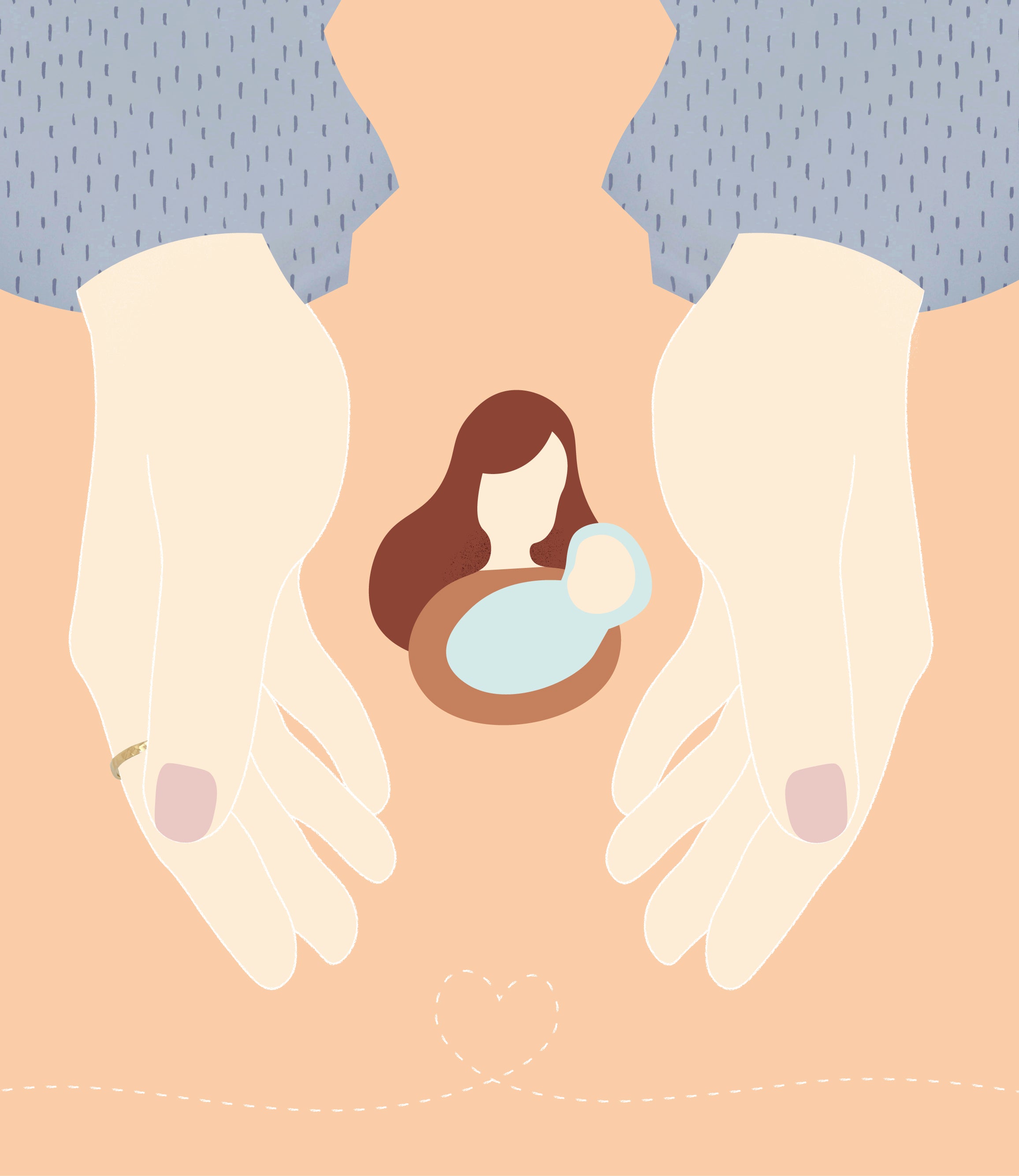
Birth as a Rite of Passage: Interview with Doula Shanay
Willkommen zu unserem Interview mit Shanay, einer Doula, die Familien während der Schwangerschaft und der Geburt begleitet. Wir haben uns sehr darüber gefreut mehr über die Arbeit einer Doula zu erfahren und darüber, wie Shanay Familien in dieser besonderen Zeit unterstützt. Sie erzählt von ihrem eigenen Geburtserlebnis und wie es sie dazu inspirierte, selbst als Doula tätig zu werden. Sie teilt ihre Philosophie darüber, wie die Geburt ein heiliger Übergangsritus für Frauen ist und warum es ihr wichtig ist einen sicheren und unterstützenden Raum zu bieten. Ihr Ziel ist es, eine positive Geburtserfahrung zu schaffen.
Let’s first briefly define the term doula before discussing Shanay’s background and experience as a doula:
A doula (from the Ancient Greek δούλη doúlē, meaning ‘female servant, slave, maid’) is usually, though not exclusively, a mother who has given birth herself and supports pregnant women, women in labor, and new mothers as a non-medical birth companion. In addition to midwives, doulas help ensure that childbirth takes place with comfort and dignity. But that’s not all. There are also doulas who specialize in supporting people in dying with dignity.
By the way, Shanay is from Australia and her native language is English. For this reason, we conducted the interview in English and translated it into German.
Let’s begin the interview. Hello Shanay, thank you very much for taking the time to speak with us.
Why did you become a doula?
My own doula inspired me 10 years ago when I gave birth to my first baby. It was born gently at home in the water. My doula was an important part of this journey for me. I loved birth in all its forms and was curious to learn more about birth and childbirth.
I have observed that the system for birth is in great difficulty because hospitals lack the staff that should offer 1:1 care and not 1:4 care. This causes far too many unnecessary traumas, too high cesarean section rates, and interventions.
That is why I wanted to make a difference and felt called to support pregnancy, birth, and the postpartum period to change how people think about birth. After three positive births, I knew that it was about the care I received, and my knowledge of how a birth can actually happen.
What is your personal philosophy on childbirth?
I understand childbirth as a sacred rite of passage for women: a life-changing experience that brings with it knowledge, growth, and discovery.
My wish is to offer women a space where they are heard, respected, and loved. Many understand childbirth as a natural process that the female body is perfectly made for. But sometimes it simply isn't like that; not every female body is designed or programmed the same way. We must also take into account the past, the birth setting, and the current life situation. The environment, such as friends and family, also plays a role. Perhaps they themselves have never had a positive birth story or grew up with a fear of childbirth because their mothers themselves did not have a good birth experience.
I cannot guarantee a birth outcome, but I promise to ask the right questions. For me, a conscious birth takes precedence over an empowered birth. During childbirth, you don't need to have fixed expectations, but rather live in the moment. The birth of your baby should be a happy and exciting moment, but sometimes it isn't, and that is also okay. Everything doesn't always have to be planned out.
How would you describe your work as a doula?
Trustworthy, caring and gentle—a professional friend, I would say. I offer the women in my care a nurturing space and follow my intuition, which I often rely on during consultations and births. I try to recognize what each woman needs to have a peaceful birth.

How do you support women who are in labor?
For my clients, I am on call from week 38 to week 42, meaning that when labor starts, they can call me at any time.
We make a plan together for when I should come to their home. I often drop by in the meantime and give the partner tips on what they can do when emotions become overwhelming. I usually come to the couples' homes so that we don't go to the hospital too early. Knowing when the right time is to go to the hospital is a major source of stress for the couples. At home, we can deal with the contractions together through massage, visualization and breathing exercises, voice coaching, positive affirmations, a calm environment with dimmed lighting, and freedom of movement. And if they wish, we can continue with this at the hospital or birthing center.
Do you have a special doula trick to help women?
Women often love a gentle back massage and light touch. During labor, I often know what they need before they even realize it themselves, whether it’s just a sip of water or a cool towel for their face.
I also use the Spinning Babies technique. It helps position the fetus optimally through simple exercises and the use of a long, firm piece of fabric. During birth, the baby adapts to every curve of the birth canal as it descends through the pelvis and turns. These turns are known as "fetal rotation." When fetal rotation can be facilitated, birth becomes easier for everyone involved.
I am happy to be honest and tell women how things really are. Having attended nearly 90 births, I can speak from experience and have a good sense of what will do them the most good at that moment.
How do you work with the partner of the expectant mother?
We are a team. I like to explain to my clients that their partner knows them better than anyone else. My presence only helps the partner be there for the woman in the way that is most comfortable for her.
When the partner sees that I am supporting his wife, he feels relieved, and the pressure is on me rather than him, so that he can enjoy the birth and be present. Contractions can also be LONG, so it is important to coordinate with the partner. This allows for short breaks while I support the birth.
Sometimes the couple is alone in the hospital room for up to 3-4 hours. If the couple wants privacy and time to themselves, doulas are very intuitive, so we know when they need it. Partners often feel very helpless and want to help, but often do not know how. I like to recommend reaching out: Dear partner, be the strong support and hug your wife! It is enough that you are there; you do not always have to do something.
What is the difference between a doula and a midwife?
I work with ALL pregnant and birthing people who are planning a natural, cesarean, or VBAC birth (vaginal birth after cesarean), whether at home, in a birth center, or in the hospital. The role of a birth companion is to support them throughout the entire birth with emotional stability, physical comfort, and non-judgmental support.
It is also about providing them with evidence-based information so that they can make informed decisions, and encouraging conversations with the obstetrician so that they can make a conscious decision.

The presence of a doula helps to reduce the risk of interventions and inductions and decreases the need for pain medication. A doula gives expectant couples the confidence to give birth the way they want to and places them in a position of safety in a caring environment. When you set aside all the monthly tests and medical conversations with healthcare providers, there is an open space where you can talk about how you actually feel in your body, and where it is about you, not the baby.
Midwives are qualified, knowledgeable, and compassionate healthcare professionals who provide medical and, in some cases, holistic support throughout pregnancy, childbirth, and the early postpartum period. Their main focus is to ensure that the woman and her baby remain healthy and safe during pregnancy, childbirth, and immediately after birth. Midwives often make house calls (every day or every other day during the first week after birth) to monitor recovery, the baby's well-being, and newborn care, and to address any questions and concerns you may have.
In Germany, there are many different types of midwives. You will be assigned a midwife at the hospital of your choice whom you have never met before. But you can also bring your own private midwife, known as a continuity midwife. Personal support is so important.
You can have both a midwife and a doula 100% of the time. And I encourage you to do so if you need that support. To put it simply, a midwife is a trained healthcare provider and a doula is, in a sense, a birth coach. The meaning of "midwife" is "with the woman", while the meaning of doula is "in the service of the woman".
How do you work with a midwife or doctor as a doula?
Doulas are quite welcome and accepted in some Berlin hospitals, but not yet in others. This is a shame, because we could really work together to make childbirth better and achieve healthier outcomes for mothers. Since we are self-employed and work independently, I enter the room with open arms, heart, and mind, and with respect. I do not make decisions, nor do I speak on their behalf to the staff or the midwife.
I do not work for the hospital, so it is important that I act professionally, work as part of a team, and encourage my clients to have a conversation with the medical staff. My clients and their partner can become clear about what they need at that moment, instead of making a decision based on fear and time pressure. I hardly speak with the staff, but rather support my clients, and if they ask questions, I am there to make suggestions and apply our BRAIN method.
Doulas have different personalities and training, just like midwives.
What is the BRAIN method?
I often use this method in the hospital, where I teach partners to open up communication with the staff so that when a decision needs to be made, we can make it on the basis of logical reasoning and not out of fear or the feeling of being pressured into what to do. We can even use this in prenatal meetings.
B- Benefits - What are the benefits, and why? Why and how does it benefit me and the baby?
R- Risks - What are the risks for me and the baby? What is the percentage or outcome?
A- Alternatives - (my favorite) What options do I have? If you don't know about them, you don't have them. What else can we try or do? I- Intuition - What does my gut feeling tell me? If I think that I need more time, or if I know that it is the right thing, then I just feel it.
N- Nothing - What happens if we do nothing, or in other words, what happens if we wait? Can we have more time?
S- Second Opinion - Can another midwife or doctor double-check what you have just said? We will speak with another advisor before we decide.
Thank you very much for the great conversation, Shanay. You have given us great insight into the valuable and important work of a doula.
About Shanay Rocker

Shanay is an internationally certified doula. She is a mother of three and was inspired by her own birth experiences to become a doula. Shanay has supported over 90 births and more than 100 families during the postpartum period, offering support based on experience and non-judgmental guidance. She has completed training and continuing education with renowned birth professionals such as Michel Odent, Debra Pascali-Bonaro, and Liliana Lamers. In addition, she is trained as a placenta encapsulation specialist and holds a first aid certification for infants and children.
Learn more about Shanay on her website or her Instagram account. Shanay is also a co-founder of Mama Muun, an online shop for restorative and postpartum nutrition.
More on the topic of birth in our magazine: Which birth location is right for me?

For your nutrition after birth
Order nowRelated Articles

Experts share their knowledge in inspiring conversations, thoroughly researched and to the point.

Pregnancy yoga really helps you
Studies show that yoga during pregnancy reduces stress, among other things, and also increases the strength and flexibility of the muscles important for childbirth.

12 things no one told you before about postpartum
The magical, exhausting and simply unique time in the postpartum period is so incredibly important and unfortunately can often be neglected.