


 Organic Baby Formula Original
 Follow-On Milk 6+
 Follow-on milk
 Organic Infant Formula from Whole Milk
 Follow-on Milk
 Organic Infant Formula from Goat's Milk
 Follow-On Milk
 Organic Bone Broth
 Beef
 For Moms
 Organic Energy Balls


Postpartum recovery
The time after the birth of a child is a period full of changes and challenges for the female body. During this phase, postnatal recovery is especially important in order to strengthen the body and restore balance. We are fortunate to speak with Feli, a mother of two and passionate CANTIENICA® trainer, who gives us insights into the world of postnatal recovery. She also explains that training the pelvic floor is already important during pregnancy. Either way, it is never too late to start postnatal recovery and to develop a healthy awareness of your body.
Feli, as a mother of two, you can certainly speak from personal experience. That’s why let’s start with a question that we all ask ourselves sooner or later as mothers, but no one talks about openly:
What should be considered when using the toilet for the first time after childbirth?
Oh yes, I can still remember both births and the first time going to the toilet afterwards very well. Depending on whether and how severe the birth injuries are, it can burn quite a bit the first few times and also hurt a little.
It is important to keep the upper body long during the first trips to the toilet after birth and ideally forever afterwards, keeping the back straight and thus also keeping the urethra and anus long. It is important to take your time when going to the toilet, so that it can "slide out" and you do not have to push or end the trip to the toilet prematurely. This can, of course, also be practiced during pregnancy.
|
Tip from the Löwenzahn community for the hospital bag: a bidet shower. |
What does postpartum recovery involve?
In the first few weeks after birth, the most important thing is rest, relief, and recovery. You can start with gentle breathing exercises, then move on to connecting with the pelvic floor, diaphragm, and other parts of the body.
After approximately 5–6 weeks following a vaginal birth (i.e., a vaginal birth without medical intervention) and 10–12 weeks after a Cesarean section, you can begin gentle exercises.
Proper skeletal alignment is extremely important for being able to engage the right muscles. This is particularly difficult for many women during postpartum recovery, as the pregnancy belly has pulled everything strongly forward.
The pelvic, hip, back, and abdominal muscles learn to reconnect with one another. This also allows the front abdominal muscles to lengthen and come back together. This is especially important for addressing diastasis recti, which affects all women after birth.
Carrying the baby, breastfeeding, pushing the stroller, etc. cause many women to complain of shoulder, neck, and head pain. Proper body alignment is especially important right now to relieve the muscles from constant tension. This is because poor posture—including the position of the head—can also affect the pelvic floor.
Postpartum recovery also requires a great deal of patience, body awareness, and trust in your own body.
“Pelvic floor exercises reduce the risk of incontinence during pregnancy and after childbirth!”
Siv Mørkved, et al.Obstetrics & Gynecology. 2003 Feb
What myths are there surrounding postpartum recovery and pelvic floor training?
- Complete a postpartum recovery course and everything will be back to normal. This is a myth! For most women, postpartum recovery takes up to 2 years or longer. Patience and continuous full-body training are crucial. Your body awareness can even become better than before pregnancy, but not everything will be exactly as it was before. Through intensive training, you will get to know your body in a new way and build confidence in it.
- Accept incontinence and organ prolapse. Absolutely not! With new posture patterns, regular training, and a positive attitude, you can do a lot for your pelvic floor and diaphragm.
- Avoid pelvic floor training during pregnancy. Quite the opposite! The pelvic floor is heavily stressed during pregnancy and needs to be strengthened. It is important to train the main layer of the pelvic floor and not just the sphincter and closing muscles. A healthy pelvic floor can be activated and relaxed – the latter, so relaxation, is particularly important for childbirth.
How long does postpartum recovery take?
I would say about two years. For some women it happens faster, for others it takes a little longer. Here too, posture and engaging the deep muscles play a very important role. If the shoulders are pulled forward and the pelvis is tilted, a person can still look pregnant or not feel stable and fit even 10 years after giving birth.
You have already mentioned the importance of posture several times.
What actually is CANTIENICA® training?
The CANTIENICA® method is a training method aimed at specifically targeting the deep muscles, those close to the bones. This includes, among others, the deep pelvic floor muscles, which experience enormous strain and stretching during pregnancy and childbirth and need to be strengthened and reconnected during the postpartum period.
But at CANTIENICA®, we always take a whole-body approach. For example, the cooperation between the diaphragm and the pelvic floor plays an enormous role, as does the alignment of the rib cage, shoulders, arms, legs, feet, head – the list goes on!
Even here it becomes clear that the method works with great anatomical precision. All exercises and positions are structured in great detail, so that no part of the body is trained at the expense of another.
Where exactly is the pelvic floor, and what exactly needs to be trained here?
The pelvic floor is a network of muscles and connective tissue located in the pelvis between the pubic bone, tailbone, and ischial tuberosities. It has three layers: the superficial layer (sphincter and closing muscles around the anus, vagina, and urethra), the middle layer between the pubic bone and ischial tuberosities, and the deepest layer, the so-called levator ani.
In CANTIENICA® training, we mainly activate the levator ani, also known as the “organ elevator.” As the name suggests, this is where the organs are located: the uterus or prostate, bladder, and rectum. You can also think of it as a (flexible) bowl that lines the pelvis and supports the organs.
The organ elevator works together with the middle and superficial layers. Here too, it simply makes sense to me that this supporting layer must be trained primarily so that it, along with the other layers, can perform its functions.
What are the functions of the pelvic floor?
The pelvic floor performs a variety of important functions in the body. It supports and holds the internal organs such as the bladder, uterus/prostate and bowel from below. In situations such as coughing, sneezing and laughing, it contracts automatically to ensure continence. At the same time, it is essential that the pelvic floor can also relax, for example when urinating, defecating, during sexual intercourse and especially during childbirth.
In everyday life, the pelvic floor supports us in numerous activities such as walking, lifting, carrying, running, jumping, balancing and more. It helps to straighten the spine and plays a crucial role in an upright posture.
The pelvic floor cannot be viewed in isolation, but is always part of and connected to the entire body.
What do traditional postpartum recovery courses get wrong?
In traditional postnatal recovery courses, the swelling and closing muscles are often mistakenly targeted above all else (e.g. by "stopping the pee"), while the supporting layer of the pelvic floor is not given sufficient attention.
Overtraining the superficial layer can lead to vaginal narrowing, as well as vaginal spasms, hemorrhoids and problems with urination. Many women also continue to suffer from symptoms such as incontinence, organ prolapse and back pain.
A full-body workout focusing on the levator ani is the most effective long-term pelvic floor exercise, restoring women's strength from the core.
What happens to the pelvic floor and the core during pregnancy?
During pregnancy, the pelvic floor is under significant strain as the baby puts weight on it. Hormones soften ligaments, tendons, and muscles to facilitate the baby's passage. During birth, the pelvic floor is stretched intensely, which is unique.
Pregnancy brings many physical changes, such as weight gain and muscle imbalances, that affect the body's core. The pelvic floor normally works closely with the hip, back, and abdominal muscles, but this connection can be lost during pregnancy and childbirth and must be restored.
What can you do during pregnancy to make childbirth and postpartum recovery easier?
Participants who already train their pelvic floor during pregnancy are better able to apply what they have learned after giving birth. Pregnancy is the ideal time to start. Developing an awareness of the pelvic floor and learning how to engage it deliberately is invaluable. Developing body awareness during pregnancy makes it easier to recall what has been learned during postpartum recovery. The body remembers well, which is encouraging to observe.
Ultimately, however, it is never too late to start pelvic floor training.
A healthy pelvic floor and good posture have a positive impact on all aspects of life, from one's own mood to managing family and work.
Thank you very much, Feli, for our conversation. It was really very interesting, and we learned a lot of new things.
About Feli

Feli, a mother of two and former competitive swimmer, passionately teaches the CANTIENICA® method. Drawing on her own experiences, she wants to encourage others to take time for their bodies. She offers special courses for pregnant women and postpartum recovery and supports women in maintaining a regular training routine in the long term. In addition, she organizes workshops on topics such as "Walking Lightly, Jogging Lightly" and "Getting Rid of Diastasis Recti - Strength and Length in the Core".
Related Articles

Healing Birth Injuries: Perineal Tears and More
Perineal tears, vaginal tears, or abrasions in the intimate area – birth injuries happen! Tips from a midwife.
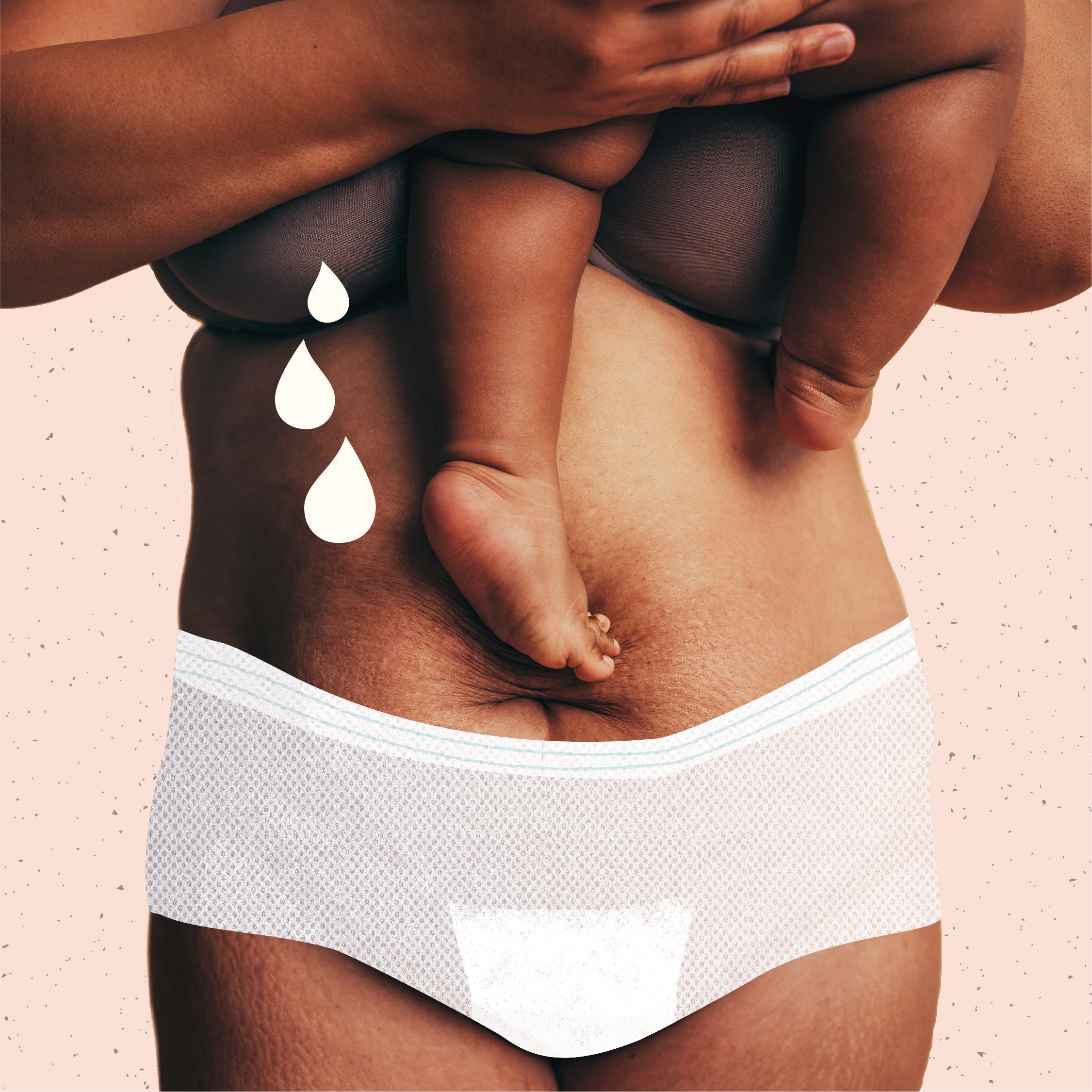
12 things no one told you before about postpartum
The magical, exhausting and simply unique time in the postpartum period is so incredibly important and unfortunately can often be neglected.

Midwife tips for daily baby care
How to care for a newborn: Tips from a midwife.


