Organic Baby Formula Original
 Follow-On Milk 6+
 Follow-on milk
 Organic Infant Formula from Whole Milk
 Follow-on Milk
 Organic Infant Formula from Goat's Milk
 Follow-On Milk
 Organic Bone Broth
 Beef
 For Moms
 Organic Energy Balls


Maternity nurse: When a baby is born, a mother is born too
Interview with a maternity carer – what, never heard of maternity carers? Or do you only have a vague idea of them? Then get ready to be curious.
Pregnancy and birth represent remarkable achievements of the female body, which, however, also require a period of recovery. Moreover, with the birth of a baby, a mother is also born, and like the baby, she needs both physical and psychosocial care. What exactly does a maternity carer do? How do you find a maternity carer? Why, actually, are not all women in the postpartum period entitled to a maternity carer for at least 6 weeks?
We met with Nadja from MDEV – Mütterpflege Deutschland e.V. and learned quite a bit about the topic of maternal nursing. Stay tuned and look forward to a really nice conversation.
What does a maternal nurse do? Why is a maternal nurse important during the postpartum period?
The role of a maternal nurse is of central importance during pregnancy, the postpartum period, and throughout the child's entire first year of life. During this crucial time, she provides practical support in the household, helps with infant care, and promotes a loving approach to newborns. Furthermore, she places great emphasis on healthy nutrition and is prepared to adapt to the mother's needs, whether through shopping or cooking.

However, their emotional support during this transitional phase is particularly important. The transition to motherhood is a profound process that brings with it a multitude of changes. This is where the maternal nurse comes in, with their special training aimed at supporting and accompanying these changes.
It is important to emphasize that the work of a maternal nurse is less based on medical aspects, but rather on psychosocial support: Through conversation, emotional attention, and simply through their presence, they are an important support for the mother during this time of change.
At the center of their work is always the individual support of the woman and addressing her needs. This can manifest in various forms, whether through counseling sessions, help with applications, or also practical support in everyday life such as childcare or running errands.
In addition, the maternal nurse also offers holistic support, including relaxation massages such as abdominal massages, which are particularly helpful in the postpartum period. One example of this is the treatment of lochia retention, where an abdominal massage can help get the blood flowing again and support involution.
Overall, the work of a maternal nurse is of great importance for the mother's well-being and the bond with the child. Their empathetic care and practical help contribute to the mother feeling supported and cared for while she adapts to her new role as a mother.
Since when have there been maternal nurses?
In the 1990s, a midwife named Dorothea Heidron in Hesse identified a gap in our system: the needs and difficulties faced by mothers during the postpartum period. In 1996, she founded her own training school for maternal care assistants. This school played a major role in establishing and further developing the maternal care assistant profession.
However, the history of maternal care assistants goes back even further. Before that, until the 1970s, there were so-called postpartum care assistants in some parts of Germany. I cannot explain why this was abolished.
Since Dorothea Heidron’s efforts, demand for qualified maternal care assistants has steadily increased. Over the years, additional training institutes have been established to meet this demand.
Despite high demand, the number of maternal care assistants is still relatively low. In recent years, however, particularly since 2017, there has been growing interest in training to become a maternal care assistant, fueled by exposure on social media. Although the exact structure of maternal care assistant training still needs further development, the recent attention brought by the COVID-19 pandemic has clearly highlighted the need for this important group of professionals.
"A maternal nurse plays a preventive role in women's health."
Nadja Laue, Maternal and Child Health Nurse and Press Spokeswoman at MDEV
What are the consequences if a woman does not receive a postpartum care nurse?
The consequences of a lack of support from a maternal nurse can be significant. Without this help, the woman may not be able to recover properly. The postpartum recovery after birth and during pregnancy is a complex process controlled by hormones. These hormones are very sensitive to external influences such as stress, fears, and worries. If these negative factors are present or if the strain starts too early, the effects on health can lead to pelvic floor damage, postpartum depression, and maternal burnout, and may even be permanent.
A maternal nurse plays a preventive role in the woman's health. By intervening early and enabling the woman to rest and go through the physiological recovery in peace, she helps the woman regain her strength and later dedicate herself to her duties as a mother.
The support of a maternal nurse is therefore not only important for the immediate time after birth, but also has long-term effects on the woman's health and well-being.
How do you find a mother’s helper?
There are several ways to search for a mother’s nurse, but I think our MDEV tool with its nationwide search is brilliant. If all active mother’s nurses registered with us, women would have a comprehensive overview of the available options. The tool allows you to find mother’s nurses in your local area using your postcode. At present, we only have a selection of mother’s nurses in our database, which we are still looking to expand.
Alternatively, you can also perform a standard Google search for “mother’s nurse” in the area you are looking in. Personal recommendations from midwives, friends, or other relevant organisations that work with mother’s nurses can also be helpful.
It is important to emphasise that we are actively working to improve the availability and reach of mother’s nurses. In doing so, we not only make it easier for those interested to find one, but also help mother’s nurses themselves secure assignments and work.
And how do you apply for a maternal nurse through your health insurance provider?
Once a mother’s helper has been found, the next step is to request an application form for household assistance from the relevant health insurance fund.
Each health insurance fund has its own application process. Although the forms vary in detail, the basic principles are similar, as they are based on statutory requirements. Our professional association is not yet in a position to contact government agencies directly to streamline or adapt this process.
However, a medical certificate is usually required with every application. This certificate must state, among other details, how many children under the age of twelve live in the household to meet the requirements for household assistance under Sections 38 and 24 of the Social Code (SGB V).
The health insurance funds then review the application within three weeks and may ask follow-up questions or involve the Medical Service of the Health Insurance Funds if necessary.

It is important to bear in mind that health insurance companies are commercial enterprises and therefore scrutinize very carefully who they provide benefits to. This can sometimes lead to delays or complicated application procedures.
A "household helper" must be certified by a doctor, which means that specific medical reasons must exist. According to Section 24h SGB V, a household helper is approved by the health insurance company if the burden of childbirth and pregnancy exceeds the normal extent. However, it remains unclear exactly what is meant by the "normal extent". This lack of clarity can be problematic, especially for single parents or people with several children in the household who may have no support. The vague wording of the laws thus poses a problem.
Why can you “only” apply for a domestic helper and not directly for a mother’s helper? After all, you do much more than just simple household chores, don’t you?
Exactly, that is correct. The health insurance companies are aware of the existence of maternal nurses, but they have not yet updated their application forms accordingly. It seems as though they do not recognize the need because of the lack of available maternal nurses. Although the concept of maternal care is not new and existed even before the 1970s, it has been neglected in the past.
Why do not all women have the right to a maternity nurse?
Due to the limited availability of maternal nurses, it is not yet possible to provide all expectant or new mothers with one. Availability is closely linked to demand.
The reason it is so difficult to convince health insurance companies of the need for maternal nurses is simple. There is a lack of scientific studies on the postpartum period and the importance of protective measures.
It is unclear whether women are able to recover sufficiently and what subsequent costs are incurred by society or health insurance companies. If we invest heavily from the outset and end up with a healthy woman, we may be able to save on later costs. However, there is a lack of evidence-based studies to influence the response of health insurance companies.
A lot of research is being conducted on perinatal mental illness, but many more studies could provide further insights. It is important to understand that mental health crises often occur during pregnancy or the postpartum period when women are alone and overwhelmed. These insights can be applied to the overall experience of pregnancy.

What is the difference between a maternal nurse, a doula, and a midwife?
A doula accompanies the woman during birth, which is the main difference from a maternal care nurse, as they do not perform this role. Doulas work privately, while maternal care nurses have the option of billing health insurance.
A midwife performs medical tasks and monitors the mother's postpartum recovery and the child's development after birth, but may also be present at birth as a hospital-affiliated midwife. The Midwifery Act regulates the scope of practice, which is reserved exclusively for midwives.
While midwives often have limited time, maternal care nurses can focus more intensively on the woman's needs. It is important that women are emotionally supported in their familiar surroundings, which, in our experience, has a positive impact on their recovery. In the event of medical questions, there is always a joint consultation with the midwife, as maternal care nurses do not perform medical procedures. It is important to emphasize that maternal care nurses do not replace midwives, but work closely with them. This collaboration makes it possible to pay more attention to the woman's needs through the additional time. The time maternal care nurses spend on site enables them to support the woman in her recovery.
Maternal care nurses also provide support through touch and massage, which is important for the mother's health. It is known that bodywork can initiate self-healing processes that are important both emotionally and physically.
Why are so many lay midwives also doulas?
Many women choose both professions, as some training institutes offer combined programs. This allows them to work as both maternal nurses and doulas. The advantage of becoming a maternal nurse is that the work is paid for by health insurance, unlike the private service provided by a doula.
For doulas, it is often difficult to care for enough women. The main problem for doulas is that they are on call and, due to time constraints, cannot care for several women at once. Some doula codes of ethics state that they should not accept any other woman for birth support for a certain period before and after the estimated due date.
Why don't many women know that there are maternal nurses?
Many women are unaware of maternal nurses because of a lack of information provided by key communicators such as gynecologists and general practitioners. These professionals are often unaware that women are entitled to support. Most women learn about maternal nurses and their entitlement to this support through friends or social networks. There is generally a lack of awareness about the availability of these services.
Pressure on mothers is increasing as they have to juggle various roles: wife, mother, colleague, employee, etc. They often see other women in their lives who seem to have everything under control without knowing what is really going on behind the scenes. There is also a generational conflict between parents and grandparents, who sometimes criticize each other or feel that they made mistakes in the past. It is important to clear up misunderstandings and to understand that parents in the past acted to the best of their knowledge and belief. Some institutions, such as health insurance companies, also show a certain dismissive attitude toward the needs of single mothers, which can lead to problems.
What are the objectives of the MDEV association?
Our association MDEV – Mütterpflege Deutschland e.V. – was founded in 2022, so it is still quite young. We have set ourselves the task of professionalizing the profession of maternal care nurses and promoting interdisciplinary cooperation.
We inform women, families, and professionals about the services provided by maternal care nurses. We also support and network with colleagues, and organize further training and specialist conferences.
On our association's website, in addition to information about the services provided by maternal care nurses, you will find a maternal care database that allows women, families, and professionals to search for maternal care nurses in their area.
We also advocate for recognition and cooperation with health insurance companies to make it easier for women nationwide to access the services offered by maternal care nurses.
How can we raise greater awareness of the role of the lay midwife and its social significance?
On the one hand, awareness of the profession needs to be increased, both among the women affected and among multipliers such as doctors and other professionals.
On the other hand, the number of training courses for maternal nurses needs to be expanded to meet the growing demand. This gap between supply and demand is a cause for concern, as demand is steadily increasing, but there are not enough qualified professionals.
Another point of focus is the revival of the "postpartum culture" and awareness of the vulnerable phases after birth, which begin much earlier and can often last for years. Starting from the desire to have a child to the time after birth. Perhaps we also need a new term here that better describes the time after birth that lasts longer than six weeks.
In my opinion, muttertät or matrescence, the latter term coined by anthropologist Dana Raphael in 1973, needs more attention. Muttertät sees the parallels between puberty and motherhood, but according to Dr. Alexandra Sacks (USA), muttertät is a longer-lasting process, until the mother even becomes a grandmother herself.
Here is a great book on the subject: https://www.hebammenblog.de/muttertaet-begriff-fuer-die-mutter-werdung/
Thank you very much, Nadja, for the really wonderful conversation. We hope that we can help make the valuable work of maternal nurses better known.
About Nadja Laue

Nadja Laue lives near Mainz with her family and works as a maternal nurse and lactation consultant, supporting parents who experience the early loss of their baby during pregnancy or the postpartum period. She is also one of the chairpersons of MDEV – Mütterpflege Deutschland e.V. In this role, she is responsible for raising the association's profile while ensuring its quality.
You can find Nadine here: https://muetterpflege-mainz.de/ and https://muetterpflege-deutschland.de/.
In summary: How to find your postpartum doula
- Finding a mother's helper
- Start your search online using the MDEV tool or via a Google search
- Ask your midwife and friends
- Request the application form from your health insurance company
- ask your health insurance company for the application form for household help
- Get a medical certificate from your doctor
- If you need a mother's helper during pregnancy, talk to your gynecologist about it. They can issue you a medical certificate.
- If you need a mother's helper after birth, you can only obtain the medical certificate after giving birth. The certificate will be issued by your treating doctor at the maternity clinic or at a later time by your gynecologist.
Tip: If your gynecologist or the doctor at the clinic is unwilling to do so, talk to your general practitioner. In the event of a mental illness, your psychiatrist or therapist can issue you a supporting letter that you can submit to your health insurance company as well.
Read on ...

For your nutrition after birth
Order nowRelated Articles
Birth as a Rite of Passage: Interview with Doula Shanay
Doulas serve women and attend the sacred rite of passage of birth, bringing knowledge, growth, and discovery.

12 things no one told you before about postpartum
The magical, exhausting and simply unique time in the postpartum period is so incredibly important and unfortunately can often be neglected.
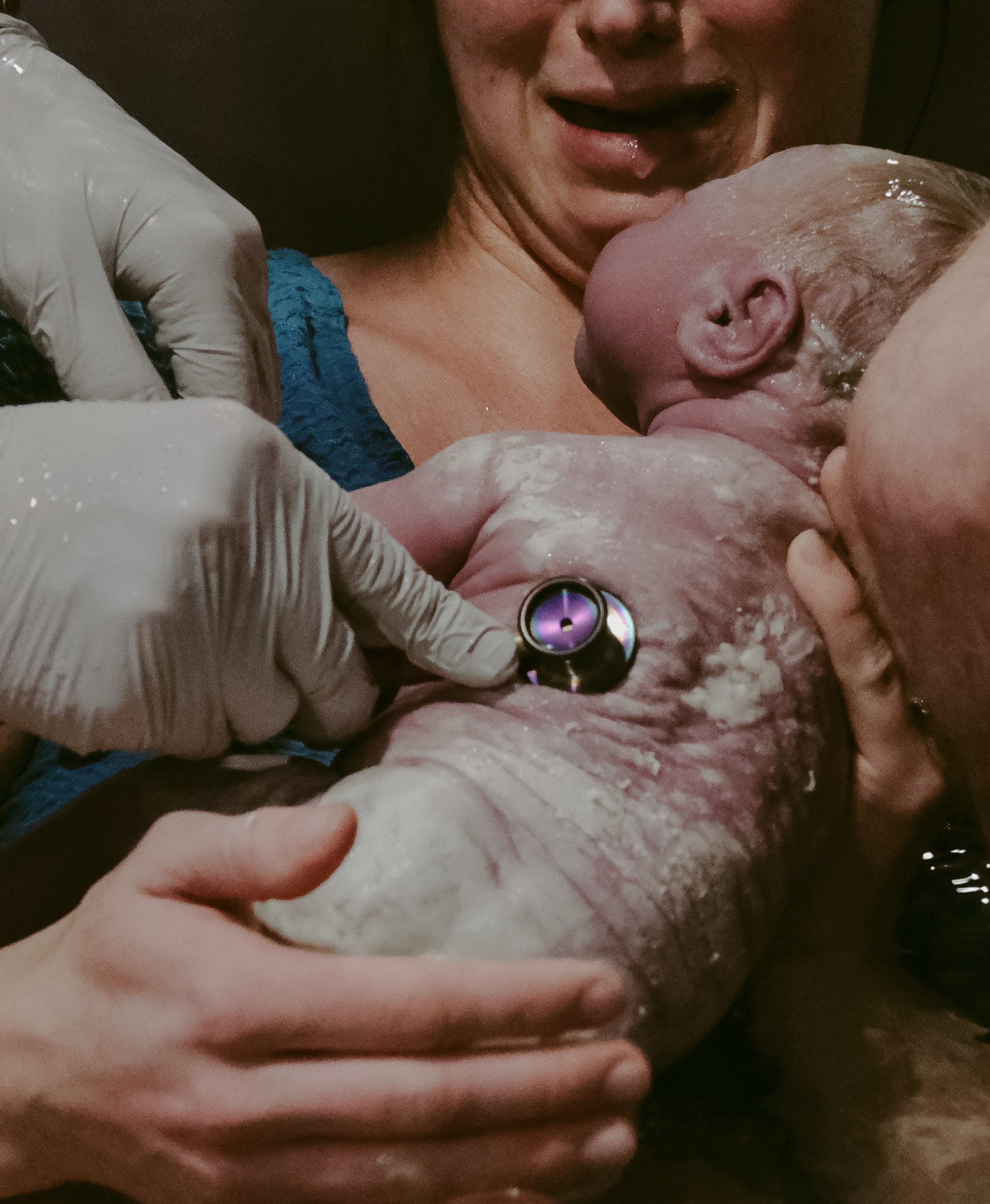
Which place of birth is right for me?
Where do you want your baby to be born? In the hospital, with a private midwife, in a birthing center, or at home?