


 Organic Baby Formula Original
 Follow-On Milk 6+
 Follow-on milk
 Organic Infant Formula from Whole Milk
 Follow-on Milk
 Organic Infant Formula from Goat's Milk
 Follow-On Milk
 Organic Bone Broth
 Beef
 For Moms
 Organic Energy Balls
 for nursing mothers


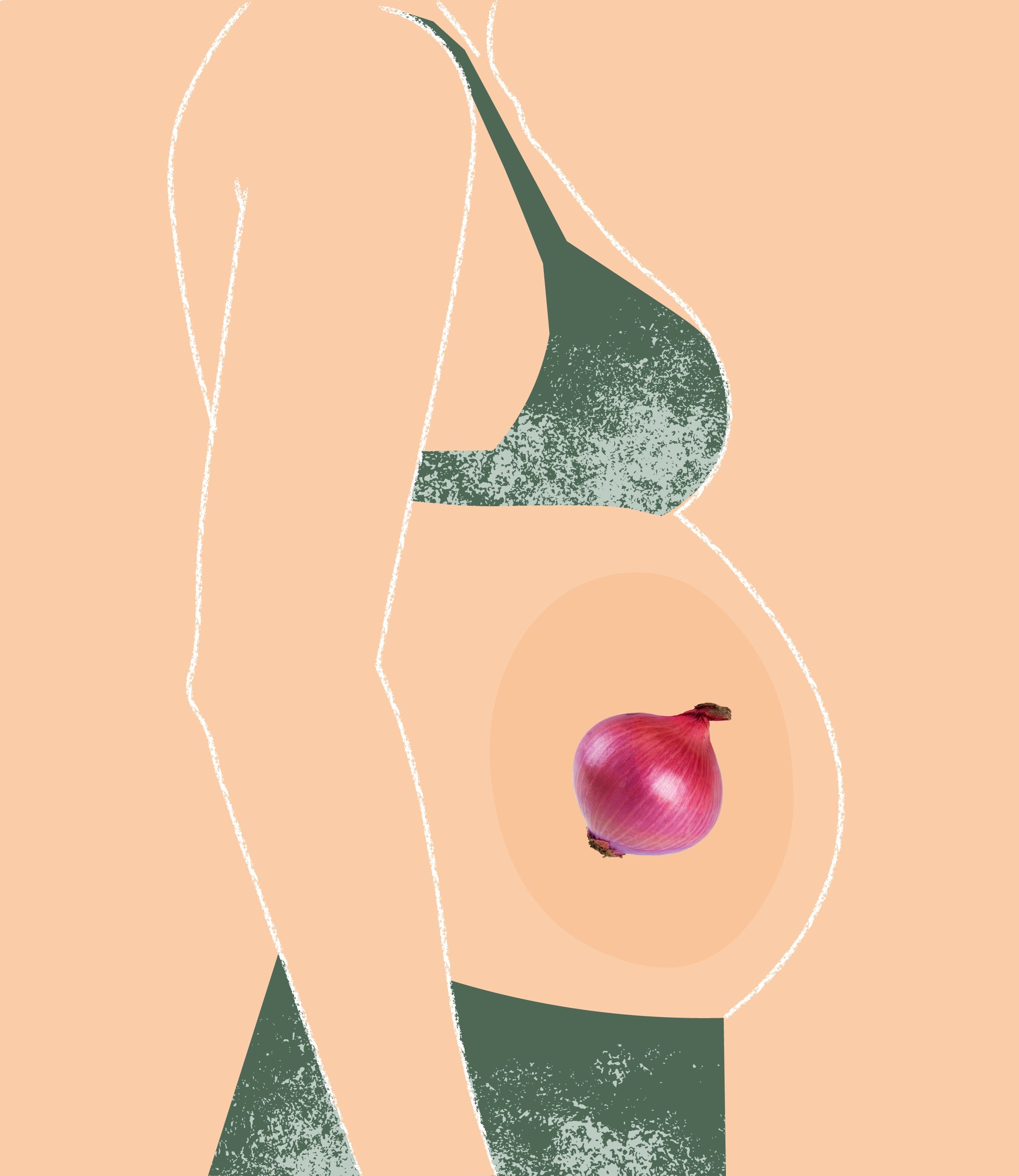
Second trimester of your pregnancy
Welcome to the second trimester of your pregnancy. From now on, many things will probably feel a bit easier for you. It is often a phase in which many women feel more comfortable and some of the initial discomforts of the first trimester subside. Time to buy baby gear, travel, and much more. The second trimester of pregnancy spans from the 13th to the 27th week of pregnancy.
Psst... Here is the way to the third trimester or back to the first trimester of your pregnancy.
Fourth month of pregnancy / 13th–16th week of pregnancy
During this time, your baby is growing quickly. The organs continue to develop, and the bones begin to harden. Many women feel the baby's first movements during this stage, which can be felt as a gentle fluttering or tickling sensation. Don't worry if you don't feel much yet.
Fifth month of pregnancy / 17th - 20th week of pregnancy
Your baby is becoming more active, and the movements are getting stronger and more noticeable. You can also feel the first gentle kicks. During this stage, an ultrasound scan can determine your baby's sex.
Sixth month of pregnancy / 21st - 24th week of pregnancy
Your baby continues to grow and gain weight. A fine layer of hair called lanugo develops, covering the baby's body. The baby's senses continue to develop, and it can respond to outside noises.
Seventh month of pregnancy / 25th–27th week of pregnancy
Your baby continues to gain weight and develop. The lungs continue to mature in preparation for breathing after birth. During this phase, you may experience contractions known as practice contractions or Braxton-Hicks contractions.
What symptoms occur in the second trimester?
Since many of the pregnancy symptoms from the first trimester have disappeared, you probably feel a bit more energetic and much more human now. With a little luck, your breasts are no longer quite as sensitive as they were in the last trimester, and your energy levels are on the rise again. More good news on the horizon: less morning sickness and fewer trips to the potty. This is because your uterus is finally moving out of the pelvic region and into your lower abdomen.
What do I need to keep in mind during the second trimester? As always, it is important to maintain a balanced diet and attend your regular medical appointments. And it is time to prepare for the upcoming birth, so attend childbirth preparation classes and create a birth plan. Have you ever thought about a doula? The second trimester is a time of growth and change, both for you and your baby. It is an exciting phase in which the pregnancy becomes more noticeable.
Let's take a closer look at the developments from week 14 to week 27 of pregnancy:
14th week of pregnancy
15th week of pregnancy
16th week of pregnancy
17th week of pregnancy
18th week of pregnancy
19th week of pregnancy
20th week of pregnancy
21st week of pregnancy
22nd week of pregnancy
23rd week of pregnancy
24th week of pregnancy
25th week of pregnancy
26th week of pregnancy
27th week of pregnancy
14th week of pregnancy
Size of the baby: 9 - 10 cm
About the size of: An orange
Weight: 57 g
Hopefully, you're feeling fitter now. Progesterone and estrogen help relax your muscles – unfortunately, your bowels too. Fiber and plenty of fluids can help relieve constipation. Your baby already weighs 57 grams and likes to suck on its thumb.
Your baby is growing by leaps and bounds and is kicking and jumping. It is now about the size of a clenched fist or an orange and is almost constantly moving; and these movements are a far cry from the jerky twitches of the last trimester. They are now more ballet-like, soft and fluid. Your baby's neck is getting longer and longer, helping it hold its head upright.
15th week of pregnancy
Baby's size: 10 cm
As big as: a pear
Weight: 71 g
Your uterus has moved down to just a few centimeters below your belly button. Your waistline is now gone for a while. Pay more attention to your pelvic floor with exercises. Wow, your baby's heart is now fully developed.
Whether you barely gained a gram in the first trimester, now is the time to gain weight. From the second trimester onwards, your baby will keep getting bigger and bigger, and therefore you should also gain weight. Get used to a slow weekly weight gain of about half a kilo, or about two kilos per month. This is an average value. It is best to follow the recommendations of your doctor when it comes to weight gain during pregnancy.
Tip: Our power broth for moms (to be) contains collagen, which can support your connective tissue even during your pregnancy.
16th week of pregnancy
Size of the baby: 10-13 cm
About the size of: an avocado
Weight: 0.09 - 0.11 kg
From day to day, you will now get rounder. Your breasts are also growing and producing what is known as colostrum. Your baby is still so small that it could fit in one of your palms. New: Every now and then, it has a little hiccup.
The tiny bones in your fetus's ears are already formed, so it will probably soon be able to hear your voice and other noises. Generally, babies fully develop their hearing in the womb by the 18th week of pregnancy.
By the way, babies who hear a song in the womb recognize the same melody when they hear it again after birth. So be careful with your choice of music during pregnancy. (This phenomenon was studied at the Institute of Neuroscience at the University of Salamanca in Spain).
17th week of pregnancy
Size of the baby: 13 cm
As big as: Onion
Weight: 0.14 kg
Your body has gotten used to the pregnancy. Use the time for yourself. Soon your attention will mainly revolve around another being. Your baby now has a well-developed sense of touch.
Your uterus is supported by thick bands (the so-called ligaments) that run from the groin to the side of the abdomen. As your uterus grows during pregnancy, these bands stretch to accommodate the growing belly, which can lead to sharp pains and dull discomfort in the lower abdomen.
To relieve the round ligament pain, you should rest your feet and slightly reduce the intensity of your workout. There is also the option of wearing a belly band to get a little more support.

18th week of pregnancy
Size of the baby: 14 cm
As big as: a zucchini
Weight: 0.14 - 0.18 kg
Due to increased blood flow to the pelvic floor, you probably have more of a sex drive. Enjoy it! Your baby's lungs continue to develop, and it "breathes" amniotic fluid in and out.
Something you cannot see on the ultrasound is your baby's now much more developed nervous system. A network of nerves that is now coated with a substance called myelin. It speeds up the flow of messages from nerve cell to nerve cell. Increasingly complex connections are being formed. The nerves in the brain are developing into those that serve the senses of touch, taste, smell, sight, and hearing.
19th week of pregnancy
Baby's size: 15 cm
As big as: Mango
Weight: 0.23 kg
Wow, you've almost got half the pregnancy behind you. In the 19th week of pregnancy, most of the fetus's organs and systems are already developed and functioning.
Can you feel your baby kicking? These first tiny kicks can be felt in different ways - usually between the 18th and 22nd week, and in first pregnancies also a week or two later.
Sometimes you feel like something is swimming in your belly (which is also the case!). But the first fetal movements feel more like butterflies in your stomach. As your baby gets bigger, you will eventually be able to recognize for sure what the little kicks feel like.
20th week of pregnancy
Baby's size: 16.5 cm
About the size of: a sweet potato
Weight: 0.28 kg
As your baby grows happily, you may find it difficult to breathe. Your uterus is now almost at navel level. Your baby is doing somersaults.
Are you curious whether there is a boy or a girl in that round belly?
Although the external genitalia still need to develop in both male and female fetuses, the sex of your baby can usually be determined by ultrasound between weeks 18 and 22 of pregnancy. You will also get a detailed look at your baby's other important organs.
In a girl, the uterus is fully formed this week, and the vaginal canal is beginning to develop. Your little girl now also has primitive eggs in tiny ovaries, about 7 million of them. By birth, this number will be reduced to 1 or 2 million. If your fetus is a boy, the testicles are now beginning to grow.
21st week of pregnancy
Baby's size: 27 cm
As big as: a large banana
Weight: 0.31 - 0.35 kg
140 days have passed since the first day of your last period. Your baby has already undergone enormous development. Other people will also start to notice that you are pregnant. Your appetite will increase once again now.
Whatever you eat this week, it is highly likely that your baby will taste it too. This is because, in the 21st week of pregnancy, your baby swallows a little amniotic fluid every day—not only for nourishment and hydration, but also to practice swallowing and digesting, skills it will need as soon as it is in your arms.
And remember: the taste of the amniotic fluid changes from day to day depending on what you have eaten.
Researchers have even found that babies who were exposed to amniotic fluid with certain flavors in the womb were more likely to be willing to eat foods with those same flavors after birth. Do you want your little one to eat broccoli later on? Then eat broccoli during your pregnancy.

22nd week of pregnancy
Baby's size: 28 cm
About the size of: a large bell pepper
Weight: 0.45 kg
Your nipples have now changed significantly again and are secreting moisture as they prepare for breastfeeding. Your baby's skeleton, toes, and fingernails are becoming increasingly firm.
In the 22nd week of pregnancy, your uterus is now about one centimeter above your belly button. But your belly isn't the only thing growing these days. Have you noticed your feet? Quick, go check now—before you can't see them anymore.
While some of the foot growth is due to pregnancy swelling (edema), there is another reason why feet increase in size during pregnancy—and sometimes don't shrink back down afterward. Relaxin—the pregnancy hormone that loosens the ligaments and joints around your pelvis so your baby can fit through—well, it doesn't distinguish between the ligaments in your pelvis and those in your feet.
When the ligaments in the feet are loosened, the bones beneath them tend to spread slightly, which can lead to an increase of half or even a full shoe size in many women. This can make your feet feel uncomfortably cramped in your shoes very quickly.
23rd week of pregnancy
Size of the baby: 28 cm
About the size of: a grapefruit
Weight: 0.54 kg
Your center of gravity has shifted due to your growing uterus. The linea nigra, the vertical line on your belly, a hallmark of pregnancy, is probably visible. By the way: Every baby has its own sleep-wake rhythm.
The baby's skin is still a little loose because it grows much faster than the fat, but it will soon adapt to its body shape as the fat deposits fill it out. When your baby is born, it will be pleasantly plump and filled out, from its chubby cheeks to its toes. And although your baby's organs and bones are visible through the skin in the 23rd week of pregnancy, it will be less translucent once the fat deposits have settled in.
Oh, and you've probably already heard your developing baby's heartbeat several times at your gynecologist's office or from your midwife. What a heart-thumping sound!
24th week of pregnancy
Baby's size: 29 cm
As big as: Pomegranate
Weight: 0.59 kg
The skin on your belly and breasts is stretching further, is probably dry and itchy. Stretch marks may have already become visible in the last week of pregnancy, but will fade again after pregnancy. Your baby's movements are becoming more coordinated and purposeful.
If your previously inward-facing belly button protrudes outward, don't worry. This happens to almost all expectant mothers. The cause is the swelling uterus, which presses on everything in its path. After childbirth, everything should return to normal, even if your belly button and some other body parts may look a little, well, stretched. Just think of it as another badge of honor that only mothers can wear.
Have you ever thought about hiring a doula to support you during childbirth and baby care? Unlike a gynecologist or a midwife, doulas have no medical training - they are primarily there to support you emotionally.
25th week of pregnancy
Size of the baby: 33 cm
As big as: an eggplant
Weight: 0.68 kg
Well cushioned by amniotic fluid and the first layer of baby fat, your baby lies safely in your womb. So don't worry if you inevitably bump your belly against something. Your baby is now starting to produce white blood cells.
What else is happening this week? No matter what your baby's skin color will be later on, it will be pink now. The amniotic fluid is perfectly climate-controlled and ensures that the baby is always at a comfortable temperature. Instead, the skin changes color because small blood vessels, called capillaries, are forming under the skin and filling with blood.
More than half of all pregnant women suffer from swollen, itchy veins in the rectum, which is due to the pressure of the larger uterus and the increased blood flow in this area. Although they are not dangerous, hemorrhoids—a form of varicose veins—can be extremely painful and even cause rectal bleeding.
Constipation can worsen hemorrhoids. The best prevention is therefore increased fluid and fiber intake and the consumption of high-fiber foods such as fruit, vegetables, and whole grains. Pelvic floor exercises (Kegels) and trying to strain less when having a bowel movement can also help.
The pain should disappear after childbirth, even though you probably won't be able to hear it anymore.

26th week of pregnancy
Baby's size: 36 cm
As big as: acorn squash
Weight: 0.91 kg
Right now, a stroking massage of the pelvic region will do you particularly good. This is because you may be suffering from back pain or tailbone pain.
About your baby: The little eyes, which were closed in recent months so that the retina, the part of the eye that focuses images, could develop, begin to open in the 26th week of pregnancy. This means that your baby can see now, even if the view in your womb is unfortunately not that exciting. At the moment, the iris, the colored part of the eye, does not yet have much pigmentation - this will only develop in the next month or two - so it is still too early to guess your child's eye color. And even the color your baby is born with may not be the final shade. You may not know for sure until they are a year old, although the most dramatic changes occur at around 6 months.
27th week of pregnancy
Baby's size: 37 cm
As big as: a head of cauliflower
Weight: 0.91 kg
Your belly is getting rounder and rounder. It's time to introduce yourself to your baby, because your baby can hear your voice now. Tell your baby how much you love it. Many pregnant women report that babies respond to this with gentle movements. Try to avoid stress as much as possible.
Two weeks ago, your belly was still the size of a soccer ball - and in the 27th week of pregnancy, your uterus has swollen to the size of a basketball. Unfortunately, that's not the only thing that swells. Almost 3 out of 4 pregnant women suffer from mild swelling of the extremities - especially the feet, ankles and hands - and this swelling can intensify now.
Edema occurs when fluids accumulate in the body tissues. Even though the puffiness is completely normal and temporary, it might be time now to take off the rings and slip out of the tight shoes.
Continue with the ...
third trimester of your pregnancy
first trimester of your pregnancy
Or ...

Expert tips for your diet during the postpartum period
TO THE FREE GUIDERelated Articles

Pregnancy yoga really helps you
Studies show that yoga during pregnancy reduces stress, among other things, and also increases the strength and flexibility of the muscles important for childbirth.
12 things no one told you before about postpartum
The magical, exhausting and simply unique time in the postpartum period is so incredibly important and unfortunately can often be neglected.
Birth as a Rite of Passage: Interview with Doula Shanay
Doulas serve women and attend the sacred rite of passage of birth, bringing knowledge, growth, and discovery.


