


 Organic Baby Formula Original
 Follow-On Milk 6+
 Follow-on milk
 Organic Infant Formula from Whole Milk
 Follow-on Milk
 Organic Infant Formula from Goat's Milk
 Follow-On Milk
 Organic Bone Broth
 Beef
 For Moms
 Organic Energy Balls


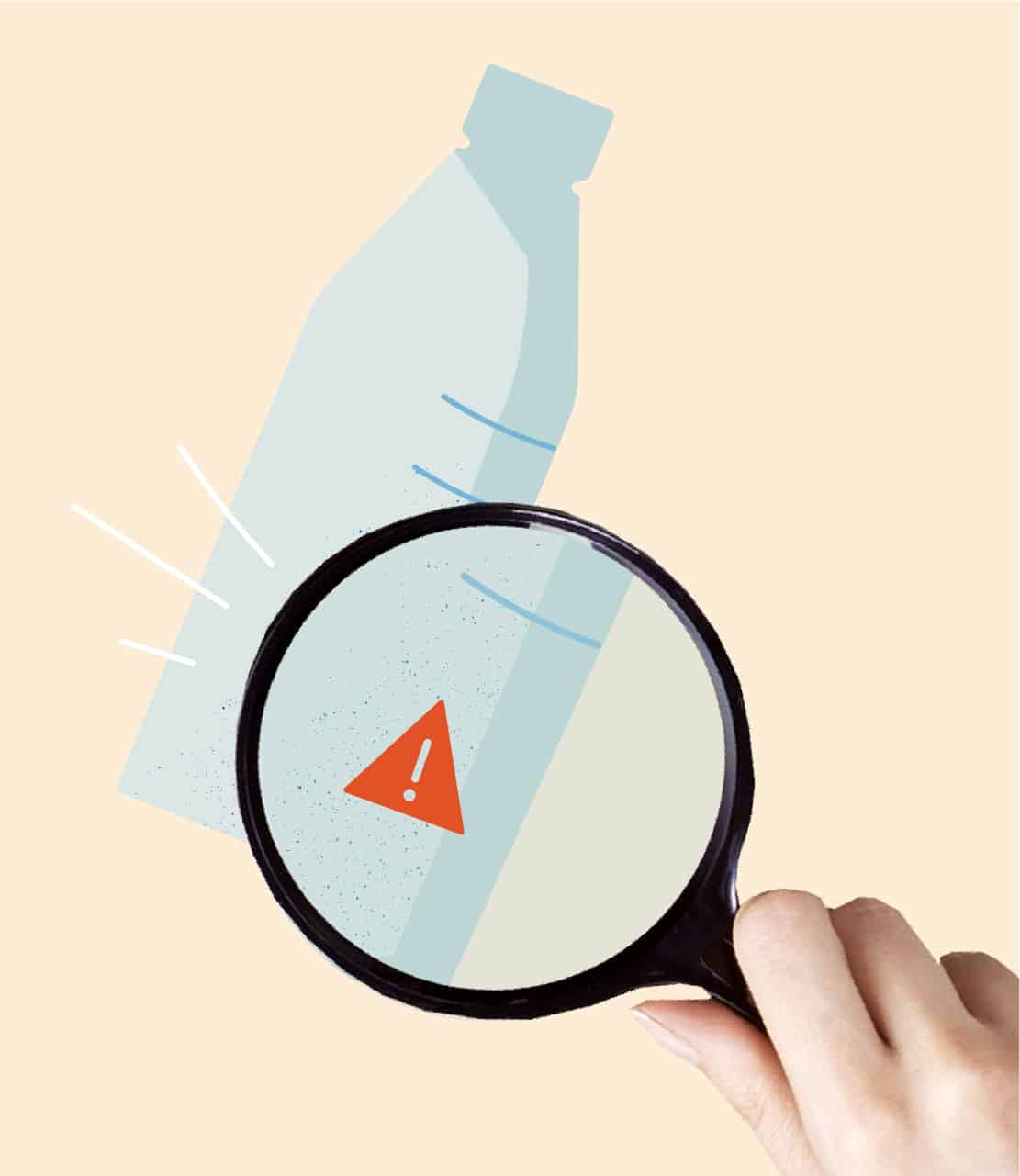
Baby Bottles and Microplastics – Why BPA-Free Isn't Enough!
Microplastics and harmful plasticizers have no place in your baby's bottle – you're sure to agree with us. As early as 2011, an EU law was passed banning the plasticizer BPA at least in baby bottles. This unfortunately does not solve the problem of microplastics or the problem of plasticizers in products for your baby. Other plasticizers such as BPS have also often replaced BPA. These chemicals probably have at least as great a health impact on the human body as BPA.
Currently, bottles made from the plastic polypropylene are popular. They are free from plasticizers, long-lasting and sturdy, but according to recent studies, they are still not harmless. They too are sources of microplastics.
Glass or plastic baby bottles?
It’s clear that if you want to feed your baby baby milk, you need a baby bottle. But which ones are actually better? Glass or plastic? Most parents prefer plastic baby bottles to glass ones.
The reasons why you might also be thinking about buying a plastic baby bottle, or why you have already decided on one, are obvious. Plastic is lighter and just as break-resistant. Babies can hold lighter baby bottles better, and it is also pleasant for you to hold a light bottle in your hand when feeding takes a little longer once again – perhaps because cuddling while feeding is particularly nice right now. But wouldn’t plastic have its downsides: microplastics and harmful substances.
Our tip: Unlike plastic bottles, glass bottles can easily be heated to high temperatures without the smallest particles breaking loose. Furthermore, they are long-lasting and very hygienic. And you can cuddle with glass baby bottles too.
What exactly are BPA and the like?
Bisphenol A (abbreviated: BPA) is one of the most widely used plasticizers worldwide and is used in plastic production. This substance harms not only you, but also the environment. It has already been detected in the human body, in the air, in dust, and in the water of rivers, lakes, and oceans.
After numerous studies have shown that BPA can affect, among other things, the human hormonal balance, the chemical was banned for baby bottles in 2011[1]. However, not for pacifiers, dolls, teething rings, and rattles for babies, or other everyday products.
Due to BPA's poor reputation, many manufacturers of plastics in the baby product segment have switched to other plasticizers from the bisphenol group. BPS is popular, but so are BPF, BPAF, BPZ, BPP, or BHPF.
“The use of BPA-free plastic products could be just as harmful to human health—including the developing brain—as products containing BPA”
|
What health risks does BPA pose? The toxicity of long-term exposure to BPA has been a subject of controversy for years. It is considered a type of endocrine disruptor because it has an estrogen-like effect that alters hormone levels. The effects of BPA have been linked to developmental disorders in girls and boys in early adulthood, as well as reproductive impairment (infertility, reduced sperm count, and impotence). Children can develop learning disabilities due to this harmful chemical. According to experts, even small amounts of BPA can potentially damage the immune system in infants, especially unborn babies, and also lead to impaired embryonic development (birth defects). Bisphenol A is also discussed as a contributing factor to type 2 diabetes, cardiovascular diseases, and obesity. |
Plastic baby bottles without plasticizers: polypropylene
Polypropylene is a plastic that does not require any plasticizers from the bisphenol family. A 2020 study by Li and colleagues published in the journal “Nature Food” found that 82.5 percent of the global market for baby bottles actually consists of bottles made entirely or partially from polypropylene[3].
Polypropylene is a very lightweight plastic that can be formed into many different shapes. It is also not easily biodegradable. Like other plastics, however, it persists for a long time as plastic waste and breaks down into tiny particles. In the ocean, polypropylene particles absorb environmental toxins and can be swallowed by marine animals or reach groundwater and thus end up in your home[4].
The problem with high temperatures
Plastic baby bottles for infant formula are widespread. The plastic polypropylene often used for this purpose does not decompose as quickly if it is not exposed to UV rays or very high temperatures.
Researchers Li and colleagues from the University of Missouri-Columbia prepared baby bottles according to the guidelines of the World Health Organization (WHO) and then measured the microplastic content in the baby formula[5].
In short: The WHO recommends filling bottles with 70 degrees Celsius hot water to reduce exposure to harmful bacteria or germs. Milk powder is then added to the bottle and shaken well. Of course, regular sterilization of the bottle at 95 degrees Celsius is also recommended[6].
However, in Europe today, preparation with 40 degrees hot water is recommended and considered sufficient to kill any germs that may be present.
The problem is that repeated changes in temperature and shaking during preparation put a lot of strain on the material of the plastic bottle.
Through a mathematical model, researchers Li and colleagues found that the average intake of microplastics per infant per day is between 14,000 and 4.5 million particles. This is 300 times more than what applies to an average adult.[5]
What effects does microplastic have on humans?
Plastic baby bottles release microplastics that are absorbed by babies' bodies. There are already studies examining what consequences microplastics have on animals or our environment[7, 8]. The question of what damage or diseases it can cause in the human body has not yet been definitively answered. There is definitely still a need for research here!
What can you do to avoid microplastics?
When it comes to baby bottles, there is a very good alternative to plastic: Glass baby bottles.
Generally, it is worth avoiding plastic and packaging materials in everyday life. When it comes to products for your baby, there are alternatives made from natural materials, such as glass, natural rubber, or even wood.
If you cannot avoid plastic for certain products, it is best to make sure that you do not leave them in the sun, so that temperature fluctuations can be avoided.
It is also important to check that pacifiers made of latex or silicone are printed with “BPA-free” on the packaging. This is because plasticizers are also often added to these materials.
One more tip for everyday life: Bisphenol A is used as a color developer for bank statements, faxes, tickets, and parking tickets (i.e., thermal paper). Therefore, be sure to wash your hands after touching thermal paper! BPA has been banned for cash register receipts since January 1, 2020. Nevertheless, they belong in the black bin and not with the waste paper.
Sources:
[1]https://ec.europa.eu/commission/presscorner/detail/de/IP_11_229 [2]https://bondlsc.missouri.edu/person/cheryl-s-rosenfeld/ [3]https://www.nature.com/articles/s43016-020-00171-y [4]https://www.nationalgeographic.com/science/article/news-BPA-free-plastic-safety-chemicals-health [5]https://www.nature.com/articles/s43016-020-00171-y [6]https://www.who.int/foodsafety/publications/micro/PIF_Bottle_en.pdf [7]https://agris.fao.org/agris-search/search.do?recordID=XF2017002714 [8]https://www.sciencedirect.com/science/article/abs/pii/S2468584417300119?via=ihub
Related Articles
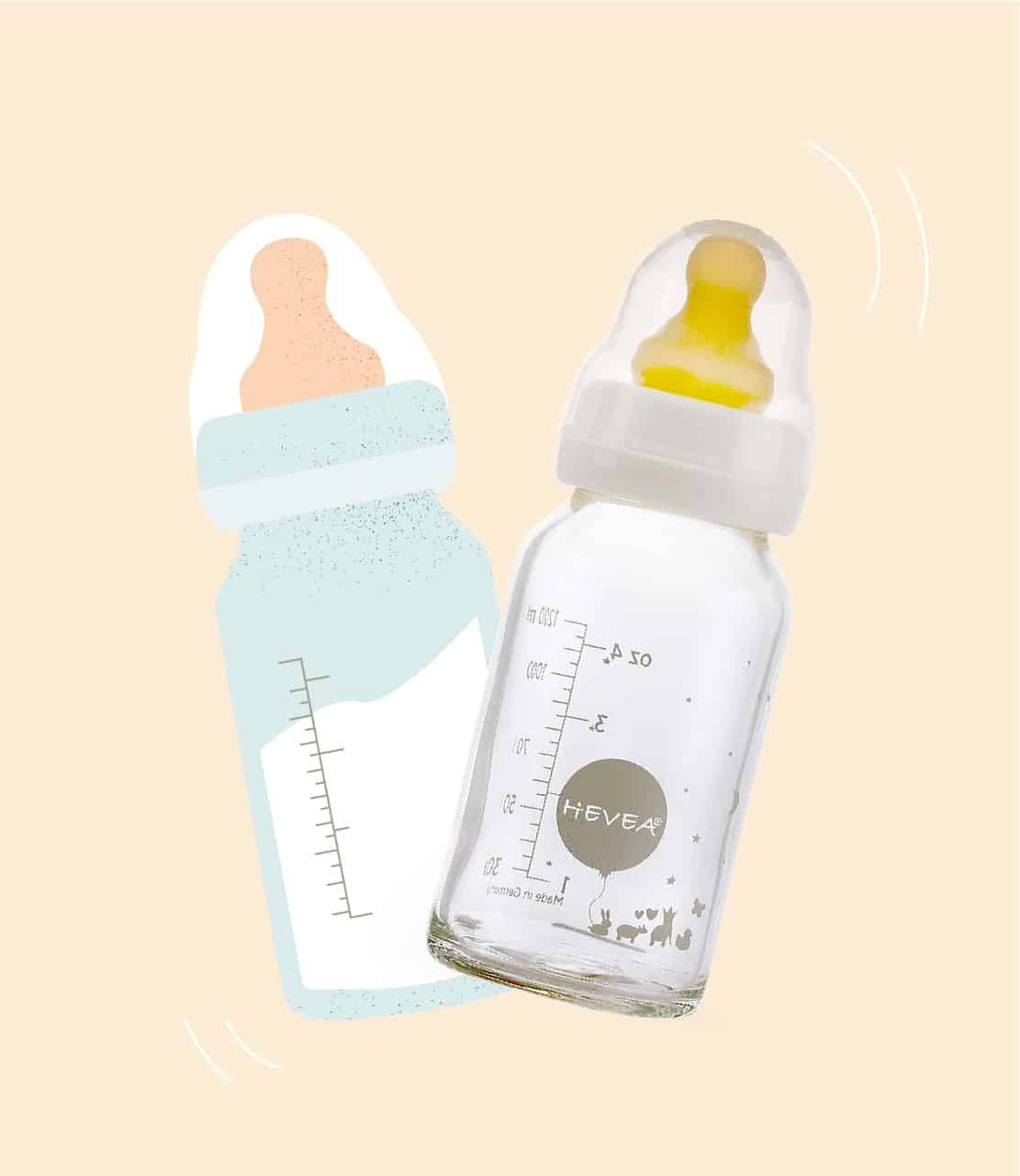
What does our Original Baby Milk consist of?
Breast milk is all your baby needs. Sometimes, however, life doesn't go according to plan. What ingredients must good infant formula contain?
How babies learn to drink is important
Learning to drink is also related to jaw, teeth, and speech development. In an interview with an expert.


