


 Organic Baby Formula Original
 Follow-On Milk 6+
 Follow-on milk
 Organic Infant Formula from Whole Milk
 Follow-on Milk
 Organic Infant Formula from Goat's Milk
 Follow-On Milk
 Organic Bone Broth
 Beef
 For Moms
 Organic Energy Balls
 for nursing mothers


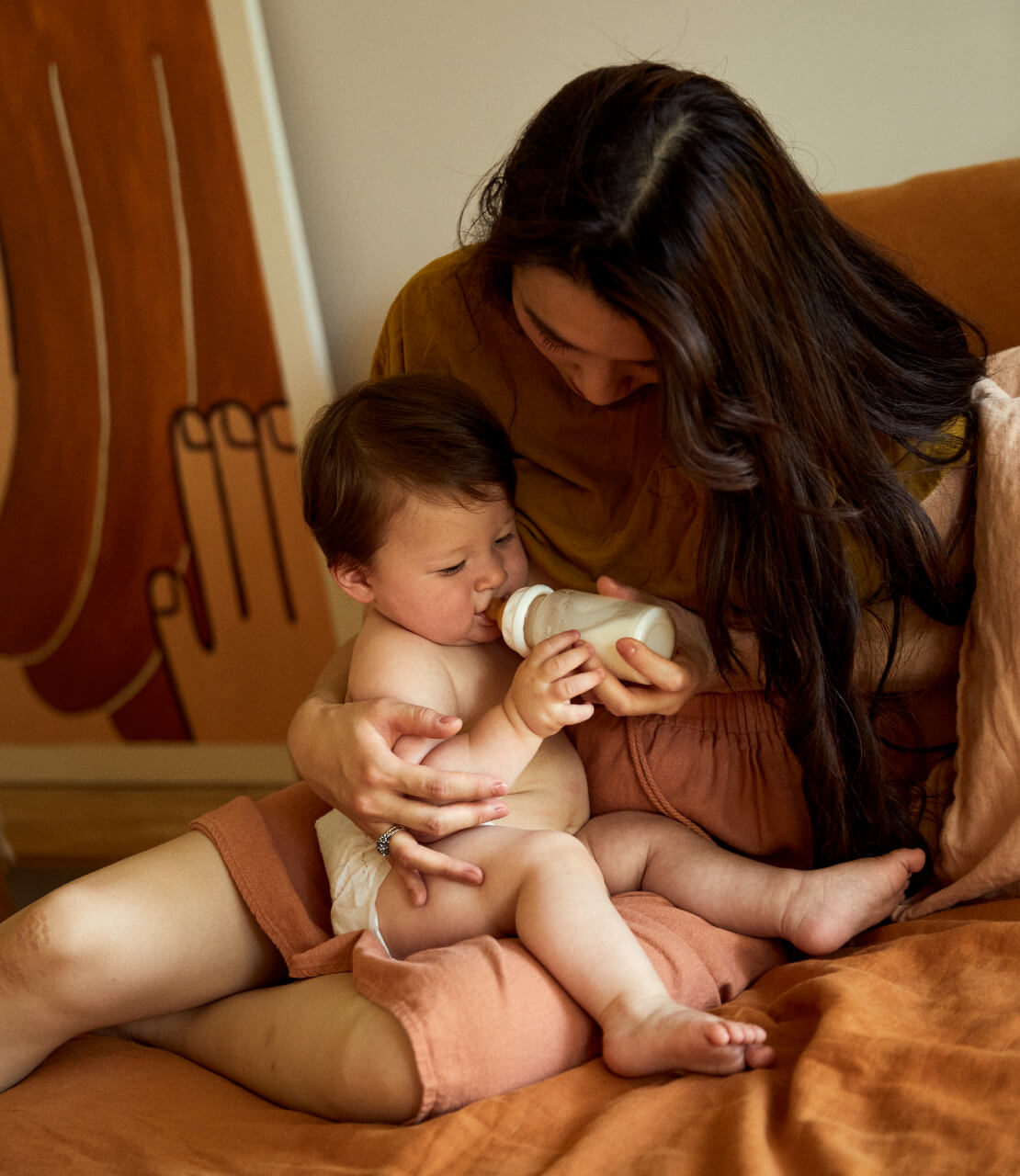
When breastfeeding doesn't work out...
For many mothers, giving a bottle is still associated with a sense of guilt. Mothers around the world are overworked, underpaid, often lonely, and feel guilty about everything—from receiving an epidural to bottle-feeding their babies. Even though it now feels like every second mother gives her baby a bottle in addition to breastfeeding or exclusively, this is often kept secret or hidden. We are giving you insight into the background surrounding “giving a bottle”.
Is breastfeeding preferable to bottle-feeding?
The World Health Organization (WHO) recommends exclusive breastfeeding for infants during their first six months.
There is no question that breast milk is the best choice for a baby during the first half of their life. The positive effects of breastfeeding on the health of both child and mother are well documented. But let's be honest, what if it just doesn't work out? And there are many reasons why full-time breastfeeding might not work. That is why it is a shame that so little is said about it.
“I still remember the DIN A0 poster that was displayed in the waiting area of my midwife's office. From the ceiling to the floor, the list of pros for breast milk was impressive. A sticky note would have sufficed for the cons. 100 against 5, good against bad. Even though the list was of medical origin, at its core, it is about much more.” – Melanie B. 28, Munich.
Possible hurdles for breastfeeding
Let's take a look at a list of possible reasons why a woman might decide not to breastfeed her baby.
- Physical obstacles: problems with the breasts, milk supply, etc.
- Emotional difficulties with breastfeeding
- The need to take medication
- The mother's conscious decision to stop breastfeeding
- Returning to work
- Lack of information about breastfeeding after birth
- Family without breasts
- Etc.
History of the Little Bottle
The above-mentioned obstacles are nothing new. Baby bottles haven't just appeared out of nowhere. The use of feeding bottles can be traced back to antiquity. There are texts from the 15th century BC in which it is recommended to feed babies a mixture of cow's milk and boiled wheat grains if the mother was unable to breastfeed.
And between the 18th and 19th centuries, infant formula reached its peak due to the shortage of wet nurses. From animal horns to tin and porcelain, baby bottles are now made of plastic or, preferably, from glass.
SuSe and KiGGS Studies: Figures on Breastfeeding or Bottle-Feeding
There are two well-known studies on breastfeeding in Germany: the SuSe Study I and II from 1998 and 2018, and the KiGGS Study I and II from 2012 and 2017.
According to the KiGGS Study, the breastfeeding rate is high at 82% immediately after birth and declines after the second month of life. Between the fourth and sixth month, 40% exclusively breastfeed.
The SuSe Study reports an increase in exclusive breastfeeding in the fourth month over the last 20 years. At four months of age, the breastfeeding rate is 56% for exclusive breastfeeding and 82% for breastfeeding in general.
Without much ado, it is clear: Approximately every second mother feeds her baby formula after the 4th month, using a bottle (in addition to breastfeeding or exclusively).

The topic of ‘bottle-feeding’ was not given much attention in any of the studies. How are parents who cannot (or choose not to!) breastfeed supposed to access information if it is acted as though these groups do not exist?
When Breastfeeding Doesn't Work: Personal Breastfeeding Stories from Two Moms
I.
“I gave my daughter milk with a bottle. Looking back, there were times when my breasts simply didn’t cooperate. The worst kind of engorgement. Nothing came out of my breasts. I came down with a fever, and my daughter was frustrated. Or I would drink my breasts dry, but she still wouldn’t be full.
Shortly after giving birth, I went to the pharmacy for a milk pump (and freezer bags). Very much in the spirit of “Expressing milk can’t be that hard.” A few days and countless attempts later came the sobering conclusion. We couldn’t do anything with those few drops. It simply didn’t work.
Aside from my physical state, my mind also refused to cooperate. For example, sometimes I needed to switch off and go to the cinema. Or work at my laptop for my job. My partner and I divided up our time as parents and also our work time. Guess what: it was the bottle that made this possible for me.
Looking back at that time as the mother I am today (not wiser, but more experienced), I can probably say that I left no stone unturned. We constantly judge ourselves and other mothers. It is every mother’s right to decide for herself why she does or does not breastfeed.” – Inga M. 38, Berlin

II.
“Breastfeeding didn’t work for me. That’s why I used a milk pump for 10 months, pumping every 3 hours at the beginning, even at night. So, I pumped exclusively for 8 months and then gradually phased it out over 2 months while supplementing with pre-mixed formula. How did it come to that?
We had a traumatic birth, including a cesarean section. My body was so broken and I was so stressed that breastfeeding was out of the question at the beginning. When I finally wanted to breastfeed, there was never a moment’s peace in the hospital. Someone was constantly coming into the room. I also couldn’t try out any breastfeeding positions because I couldn’t move around with my scar. How were we supposed to build such a breastfeeding relationship? So I started pumping—anytime, anywhere.
The thought that I would soon have to pump again stayed with me for months. On top of that, preparing and cleaning up baby bottles is time-consuming: washing them, sterilizing them, lugging the pump around, pumping at night, etc. It was a huge effort and, of course, there was always a bad conscience involved.” - Magda W. 34, Stuttgart
Why are there so few moms who feed their baby with a bottle in public? Where are you, moms?
"As a mother, I felt desperately lonely and unbearably humiliated by grinning strangers on the bus."
Little bottles on social media
Small bottle in public
Baby bottles. Where are you? We know they exist, yet they appear in public less often than mothers' breasts nursing a baby. We welcome both equally: mothers showing their breasts in public, and baby bottles too.
It is not only the external pressure to breastfeed, but also the internal pressure. That is exactly why so many mothers feel vulnerable when they give their baby a bottle – from stares and unsolicited comments from strangers, acquaintances, friends, or relatives.
Mothers also get depressed
There are mothers who struggle so much with the persistent guilt of not being good enough as a mother that they develop depression. We have explored the topic of depression with a focus on the postpartum period and interviewed an experienced psychologist about postpartum depression.
Last but not least: #noShameInYourFeedingGame
Mom, you are not alone. You are the expert when it comes to you and your baby. You did not make the decision to turn to a bottle and formula lightly. Even if breastfeeding isn't working out, you are doing a great job and you haven't failed your baby by using a bottle to feed your baby: #noShameInYourFeedingGame
Sources:
Related Articles

Changing baby milk – how, when, why?
When do you switch from initial "pre" milk to follow-on formula, i.e. to the next level? Or what do you do if your baby doesn't tolerate the current baby formula well and would like to switch?
Calculate how much your baby needs to drink!
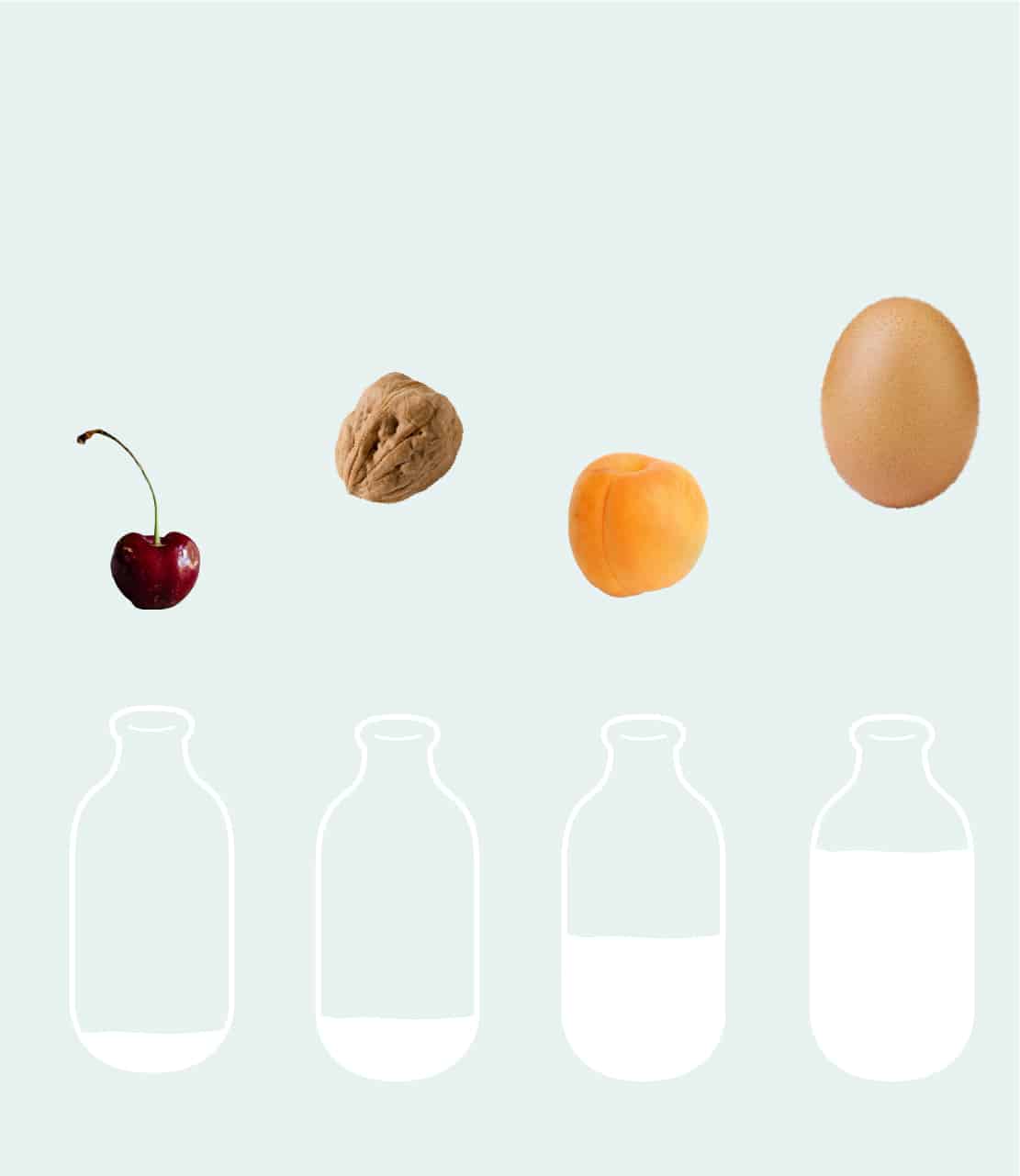
How do you know your baby has had enough? Is it possible to overfeed or underfeed your baby? How to calculate how much your baby is drinking...
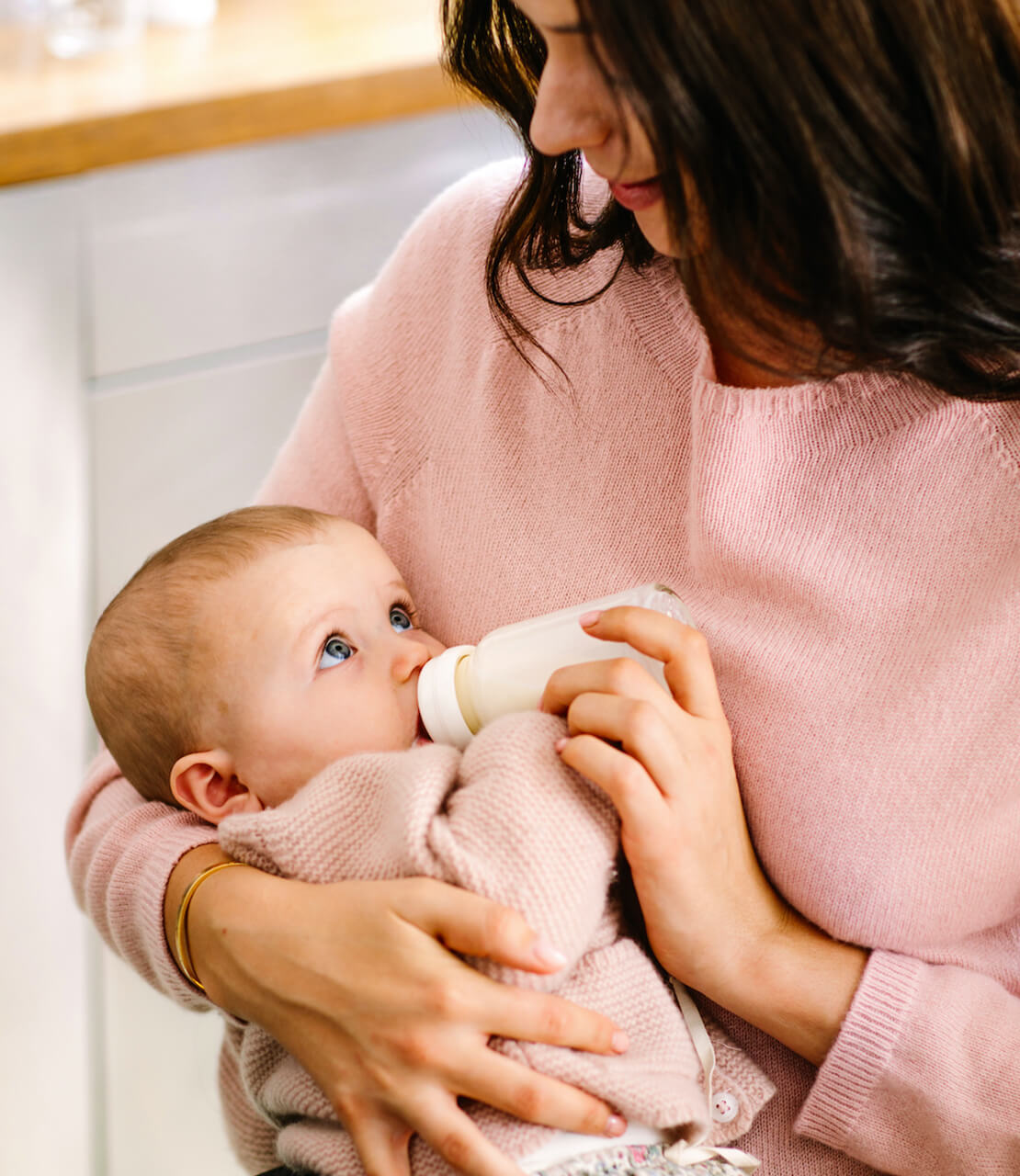
Pre, Starter, and Follow-on Formula: Which Baby Formula is Best and When?
Get an overview of the different types of baby formula


