


 Organic Baby Formula Original
 Follow-On Milk 6+
 Follow-on milk
 Organic Infant Formula from Whole Milk
 Follow-on Milk
 Organic Infant Formula from Goat's Milk
 Follow-On Milk
 Organic Bone Broth
 Beef
 For Moms
 Organic Energy Balls
 for nursing mothers


Cesarean Section – Clarity for Your Birth Preparation
A cesarean section, or abdominal birth, is nothing unusual these days. According to the Federal Statistical Office, the cesarean rate for hospital births in Germany was 30.9% in 2021. There are countless reasons for a cesarean section, whether it concerns the health of the woman or the baby, or whether it is a deliberately planned decision. We spoke with Christiane Hammerl, a private midwife who attends births at a hospital in Berlin. Together with her, we discuss unplanned and planned cesarean sections, how a cesarean section takes place, reasons for one, and myths surrounding the topic. A topic that is still taboo in many minds. Stay tuned.
Hello, dear Christiane, we are very happy that you have taken the time for us today and invited us to the Vivantes hospital in Friedrichshain. We are really surprised by how friendly and beautiful everything is here. Today, we would like to talk to you about the topic of cesarean sections and destigmatize it.
What is the most beautiful moment for you during a Cesarean birth?
For me, the most beautiful moment is when mom and baby touch for the first time. And then they can cuddle skin to skin. All of this still takes place in the operating room. The first bonding moments are simply the most beautiful for me.
What is a cesarean section?
A cesarean section, medically also known as a sectio caesarea, is a surgical procedure for delivering a baby, in which the newborn and the placenta are removed through an incision in the mother's abdomen. That is why I also like to speak of a belly birth instead of a cesarean section.
When is a cesarean section performed?
A cesarean section can be primary or secondary. Primary, to be precise, refers to the fact that labor has not yet started, while secondary refers to the fact that labor is already underway. There are many good reasons for both cases.
A primary cesarean section usually occurs when a vaginal birth is impossible. Factors include the placenta being positioned in front of the birth canal, medical conditions, or maternal anxiety. The baby being positioned in a way that makes vaginal birth impossible. Depending on the clinic, the planned cesarean section takes place one or two weeks before the calculated due date.
A secondary cesarean section occurs when certain complications arise during labor. For example, when the cervix is fully dilated, but the baby does not turn into the correct position to pass through the pelvis. Normally, the baby should ideally place its head on the mother's chest to slide more easily into the pelvis, but sometimes this simply does not happen. Note: Breech position is not always an exclusion criterion for a vaginal birth.
If, despite numerous attempts such as the use of an oxytocin drip, an epidural, or various maternal position changes, the baby does not move properly into the pelvis, a cesarean section may be necessary.
Another reason for a cesarean section could be if the baby's heart rate repeatedly drops and the baby is under severe stress. In such cases, a blood sample can also be taken from the baby's head to check the oxygen level. If it becomes clear that the baby is suffering from significant stress, a cesarean section will be performed.
Unfortunately, it is impossible to predict beforehand whether a cesarean section will be necessary. It is only during the birth process that a decision is made about what the next and best step will be for the mother and the baby.
Side question: Is it possible to turn a baby into the correct birth position?
Of course, in our hospital, doctors can perform this. If it is determined before birth that the baby is not in the optimal position, the woman can make an appointment with us at the hospital. A labor-suppressing medication is used while the baby is turned under ultrasound and CTG monitoring (i.e., monitoring vital signs such as the baby's heart rate). However, there are several factors that must play a role in this.
There are also situations in which turning is not possible. For example, it could be too painful for the woman, so the doctor cannot turn the baby. Or the baby is already deep in the pelvis due to advanced labor. Another obstacle could be an anterior placenta, fibroids, cysts, or a previous operation on the uterus. This also includes a cesarean section scar that has not fully healed. Because a cesarean scar in the uterus can take up to two years to heal completely. Even if the scar is not visible on the outside of the skin or if the external scar on the skin has healed beautifully. The doctor can best decide whether it is possible to turn the baby in the womb despite possible risks.
Why do women consciously choose a planned cesarean section when there are no medical reasons?
Women may choose a planned cesarean section because they fear the unpredictability and pain of natural childbirth. The uncertainty about when labor will begin and how the birth will unfold can be frightening. A planned cesarean section, on the other hand, offers a certain level of predictability, as a specific date is set. Some women also express a desire to preserve their vaginal anatomy—quite literally to “save your love channel.”
Previous traumatic birth experiences can also be a reason to choose a cesarean section. Quite simply, to avoid similar experiences and ensure a positive birth experience.
A planned cesarean section allows women to know the exact due date and adjust their plans accordingly. This can be appealing to working women who need to schedule their time carefully, or to couples who prefer a set date for other reasons.
In any case, women may consciously choose a planned cesarean section for various personal reasons, even when there are no medical necessities. This choice is entirely up to the woman. As a midwife, I can support women with any questions about planned cesarean sections so that they can make an informed decision.
How does a Cesarean birth proceed?
A cesarean birth follows a standardized procedure that differs from a planned or unplanned cesarean only in the initial phase. After all, even when a cesarean is unplanned, there are early signs of where things are headed.
Warning: I’m about to get a little more detailed and descriptive. Feel free to stop me if it becomes too much.
For a planned cesarean birth, a prenatal consultation takes place before the scheduled cesarean. The woman is informed about the procedure by the senior physician and also receives information about the anesthesia—usually a spinal block—during an appointment with the anesthesiology team. At the hospital, she is also given supplies for an enema and a stool softener to take home.
For the appointment itself, the woman arrives at the hospital fasting with a well-packed hospital bag, as a cesarean birth means staying in the hospital for a few days longer.
And from this point on, planned and unplanned cesareans are hardly different anymore.
Process of a Cesarean Delivery
On the day of the cesarean section, a midwife (or another medical professional in the hospital) initially takes charge of the next steps. They check whether the intimate area needs to be shaved, perform a CTG to measure the baby's vital signs (heartbeat), and administer an IV drip (saline solution) to the mother. Then the woman is given a bonding top—a spaghetti-strap top without spaghetti straps. And finally, the woman puts on a hospital gown.
Then it's a matter of waiting until the anesthesiologist picks up the woman for the operating room. Together, the woman, doctor, and midwife go to the operating room, where the spinal anesthesia is immediately administered. After that, the legs go into the leg holders, just like at the gynecologist's. The arms are secured so that they don't just flop down, and then a cuff is attached—so that the woman's vital signs are measured at all times—oxygen saturation, blood pressure, etc. Then a bladder catheter is inserted, so to speak, a mobile toilet. This is removed after 24 hours. The abdomen is washed and covered with sterile cloths.
Finally, the surgeons come in. The abdomen is pinched again to check that the woman doesn't feel anything. So you can feel touch; but no pain; like at the dentist. Then the various layers of skin are cut open—the surgeons can tell you more about that—the baby is taken out, the face wiped, the umbilical cord clamped, and held over the curtain so that the mom can see the baby right away.
The midwife stands next to it with a sterile cloth and takes the baby. If the baby is fit and in good spirits, it is first brought to the mother for the first little kiss and cheek contact.
After that, the pediatrician examines the baby carefully. Only then does the midwife return with the baby and put it in the bonding top. Then another warm towel is put over it. Now you can continue cuddling while the mother's skin layers are sewn back up. Oh, and before that, of course, the placenta also comes out over the abdomen.
After a Cesarean birth
The baby then stays with the mother, who is transferred from the operating room to her hospital bed. The midwife continues to monitor the mother for another three hours, checking her vital signs, dressing, vaginal bleeding, and carefully palpating her abdomen. She also checks whether the newborn is feeding from the breast, performs the initial newborn examination, weighs the baby, etc.
Cesarean section scar—what determines what it will look like?
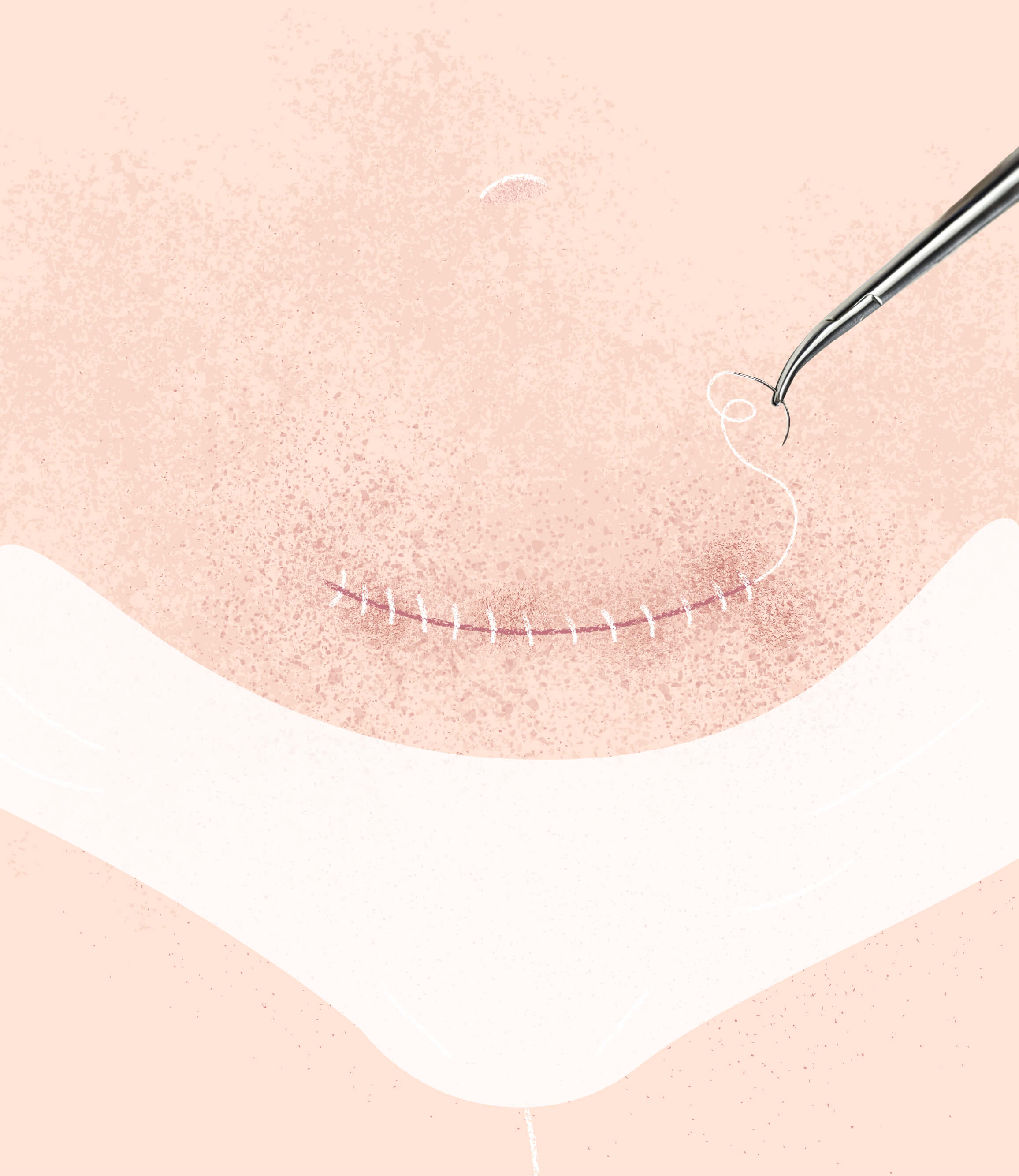
Typically, a cesarean scar runs above the pubic hair line. The incision is usually made horizontally unless complications arise. In such cases, a vertical incision may be made to provide greater access to the abdominal cavity.
What the scar ultimately looks like varies greatly from woman to woman and is not necessarily related to the type of incision. Some women heal exceptionally well, while others are less fortunate. This can result in a scar with excess tissue. Sometimes it also depends on how carefully the stitches were placed.
What is the best way to care for a cesarean section scar?
Initially, a dressing is placed on the wound. It is then crucial to disinfect the wound regularly. When showering, water should flow gently over it, followed by careful patting dry. Some prefer to use a sanitary pad to keep the wound dry. A belly belt can also be helpful. Alternatively, the use of a laser can be considered, either under the guidance of a midwife or by borrowing a soft laser for home use. There are also oils and creams that can be used for massage after the wound has healed.
Uterine involution after a Cesarean section?
Early postpartum exercise, which includes aspects such as mobilization and the prevention of thrombosis and pneumonia, can be carried out as early as the first few days after birth.
A classic postpartum recovery course in a group with other women usually begins about 8 weeks after a vaginal birth. It is important to take into account how the woman is feeling at that time. If a woman already feels very fit after 3 weeks, she can attend a course as early as 6 weeks after birth.
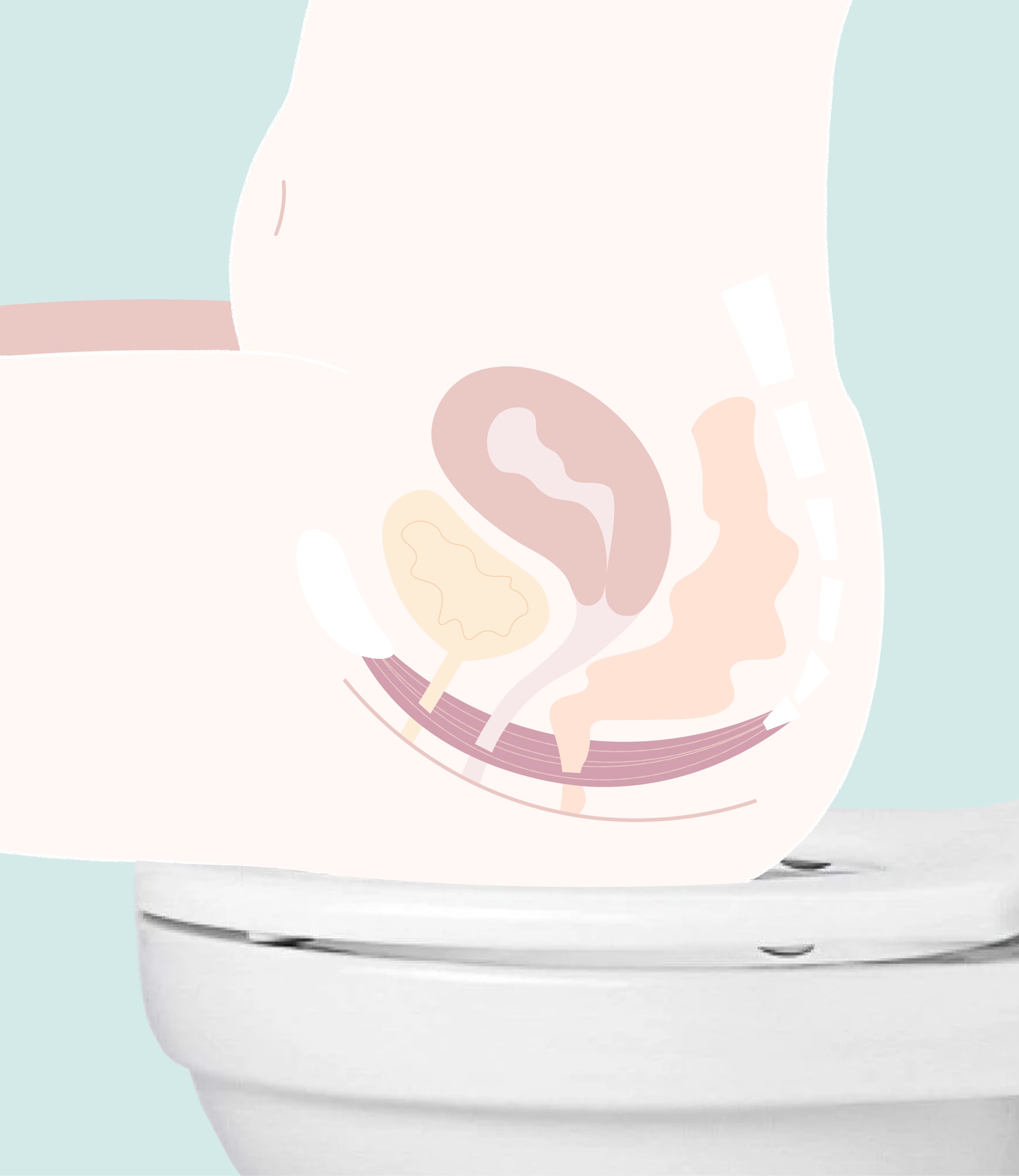
A cesarean section is one of the major abdominal surgeries, in which several layers of the body are cut. Therefore, the body needs time to recover. Important: Nevertheless, a cesarean section also puts a strain on the pelvic floor.
What myths about cesarean sections do you keep encountering? Is there one that really annoys you?
I repeatedly encounter the misconception that doctors would prematurely opt for a cesarean section in the delivery room—for financial reasons. I have not yet gathered this experience in my professional life.
Whenever I hear the rumor “Hospitals tend to favor cesarean sections,” I always wonder: which hospital exactly? In my opinion, you cannot generalize about all hospitals. Furthermore, I cannot imagine a midwife or doctor getting up early in the morning and saying, “Alright, now let’s do the chief physician a favor, let’s perform seven cesarean sections now, and tomorrow we’ll get a nice bonus.”
A birth, no matter how well it has been planned, always remains unpredictable. Basically, you cannot truly plan a birth, because in the end, babies always do what they want.
Thank you very much, Christiane, for our conversation and also for your detailed answer about the procedure of a cesarean section. It was a great pleasure talking to you, and we hope that together we can bring a little clarity to the topic of cesarean sections.
About Christiane

Christiane Hammerl is a self-employed midwife in Berlin. She assists with births at the Klinikum Vivantes Friedrichshain. As a midwife, she also supports young families during pregnancy and the postpartum period. Her focus is on one-on-one birth support. You can find Christiane on Instagram:@Hebamme_Christianeand@Hebammenzimmer.berlin.
We also interviewed Christina about episiotomies .
Source
https://www.destatis.de/ Almost one third of all births in 2021 by cesarean section

Expert tips for your diet during the postpartum period
TO THE FREE GUIDERelated Articles
Ultimately, it's never too early or too late to start pelvic floor training. In an interview with a CANTIENICA® trainer.

12 things no one told you before about postpartum
The magical, exhausting and simply unique time in the postpartum period is so incredibly important and unfortunately can often be neglected.
Which place of birth is right for me?
Where do you want your baby to be born? In the hospital, with a private midwife, in a birthing center, or at home?


