


 Organic Baby Formula Original
 Follow-On Milk 6+
 Follow-on milk
 Organic Infant Formula from Whole Milk
 Follow-on Milk
 Organic Infant Formula from Goat's Milk
 Follow-On Milk
 Organic Bone Broth
 Beef
 For Moms
 Organic Energy Balls
 for nursing mothers


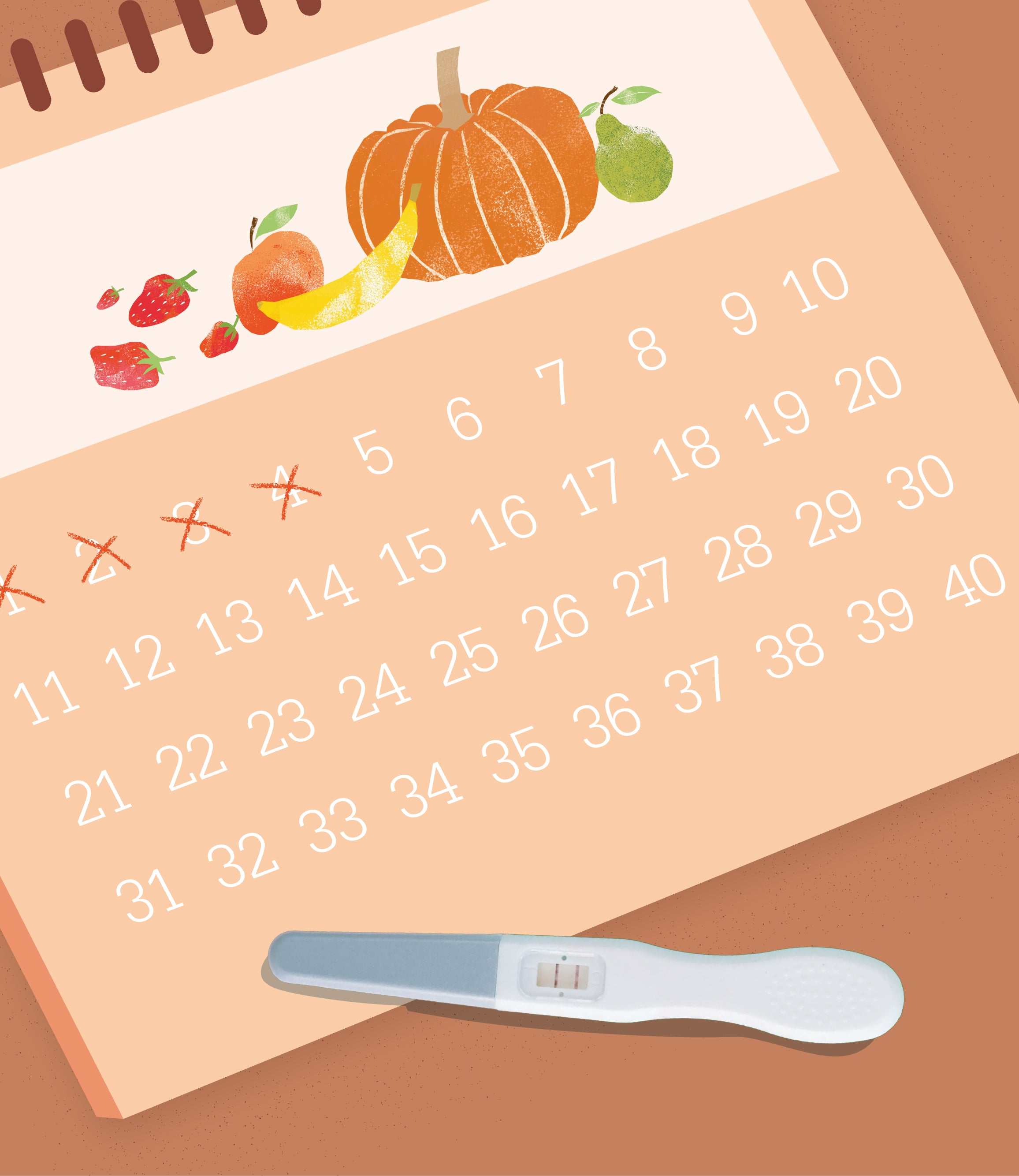
Pregnancy Calendar
Insights into this new chapter of life: Pregnancy is an exciting—but also incredibly exhausting—time for your body and your heart, your mind, and your entire life. What have you already accomplished, and what lies ahead for you—or for both of you? Are you excited and scared at the same time, or do you sometimes feel more of one and then more of the other? Everything is going to change. It will be wonderful, but also turbulent—and certainly not always easy.
We hope that our pregnancy calendar can provide you with some answers to your burning questions during this exciting time. How will your baby and your body change from the first weeks to the last weeks of your pregnancy?
We have divided the pregnancy calendar into 3 trimesters, 10 months, and 40 weeks of pregnancy. But wait: Before we jump to the trimesters and the individual weeks of pregnancy, let's take a look at the calculation.
If you already know all this: here you go to the first trimester, to the second trimester and to the third trimester.
Tip: Our power broth for moms-to-be (to be) contains collagen, which can support your connective tissue even during your pregnancy.
Pregnancy in weeks, months, and trimesters
People who haven't yet familiarized themselves very much with the topic of pregnancy often talk about months of pregnancy. However, that changes quickly once you learn more about pregnancy and trying to conceive. At the latest after your first visit to your gynecologist, you will only talk about weeks of pregnancy. No wonder, because your baby and your body develop from week to week.
Now let's get to the definitions. In total, a pregnancy usually consists of 280 days, 40 weeks of pregnancy, rounded to 10 calendar months and 3 trimesters.
A trimester lasts 13 weeks of pregnancy. The first trimester begins in the first week of pregnancy, the second trimester in the 14th week of pregnancy and the third trimester in the 28th week of pregnancy - so week 1, week 14 and week 28 are the start of the trimesters.
How are the weeks of pregnancy calculated?
Weeks of pregnancy are counted from the first day of your last menstrual period. So, technically, you aren't actually pregnant yet at that point. This calculation is more accurate because not all women know the date of their ovulation and conception.
If you have a regular period, you are basically only pregnant in the third week of pregnancy. That is, from the moment a sperm has fused with one of your eggs and is traveling through the fallopian tube to your uterus. However, the pregnancy can only be detected once your body has produced enough of the pregnancy hormone hCG. And that, in turn, only happens from the fourth week of pregnancy. That is, once the fertilized egg has made itself comfortable in your uterus.
1st Trimester: Weeks 1–13 of Pregnancy
Big changes in the first trimester: “Help, I’m really pregnant.” Maybe you planned it, and maybe you didn’t. Talking about it and actually being pregnant are still two very different things. No matter how you feel, it’s okay. Learn more about weeks 1–13 of pregnancy
2nd Trimester: Weeks 14–27 of Pregnancy
Welcome to the second trimester of your pregnancy. From now on, many things will probably become a little easier for you. Buying baby essentials, traveling, and much more are on the agenda. More about weeks 14–27 of pregnancy
3rd Trimester: Weeks of Pregnancy 28–40
The final trimester. Now it really isn't that long. Just a few more weeks before all your attention will be focused on your baby. Try to find a little time for yourself and schedule some wellness time. More about weeks 28–40 of pregnancy
Trigger warning for well-meaning advice: A thousand questions are going through your head and those around you are unsettling you with more or less well-meaning advice – more than you already have. “Don’t worry” is easy to say, after all, it’s about your baby, a new little person for whom you bear full responsibility. You want to do everything right. And that’s exactly why: Expect the best. Positive thoughts are good for you now both mentally and physically. If you have a phase where you’re not feeling well, why not check what you can do about it? What brings you joy? Do you have a music playlist to lift your mood? When was the last time you went to a spa? Did you know that there are even special massage offers for pregnant women? Tips for your pregnancy.
Important: Every pregnancy is different. If you are worried, contact your doctor or midwife.
Read more ...
Which place of birth is right for you

Frequently Asked Questions About Pregnancy
1 How long does a pregnancy last?
A pregnancy usually lasts about 40 weeks, rounded to 10 calendar months or 3 trimesters.
2 How can I find out if I am pregnant?
A pregnancy test that detects the hormone hCG in urine can provide information. To be really sure, you should have a pregnancy test done by your gynecologist.
3 What are typical pregnancy symptoms?
Typical symptoms of pregnancy include, for example, morning sickness, frequent urination, fatigue, tender breasts, and mood swings caused by the female hormones estrogen and progesterone.
4. Which activities should I avoid during pregnancy?
During pregnancy, you should avoid activities with a high risk of injury, such as contact sports. You should also, of course, refrain from smoking and consuming alcohol.
5. How often should I see a doctor during pregnancy?
It is recommended to have regular prenatal check-ups with a gynecologist and/or a midwife. The exact examination intervals may vary depending on the course of the pregnancy. Talk to your gynecologist about this.
Roughly summarized:
- Trimester: In an "initial examination," the pregnancy is confirmed by a doctor.
- Trimester: As a rule, a prenatal check-up takes place every four weeks. The progress of the pregnancy is monitored, blood pressure, weight and urine are checked, and the baby's growth and heartbeats are monitored.
- Trimester: Approximately every two weeks, a prenatal check-up takes place. In the final weeks, it may also be that your doctor increases the examination intervals to weekly appointments.
6. Which prenatal vitamins should I take?
During pregnancy, doctors usually recommend supplementing with folic acid and iodine. Prenatal vitamins that can be taken in addition, if needed or after a deficiency has been identified, include vitamin D, calcium, iron, and other important nutrients. Talk to your doctor about the right dietary supplements for your pregnancy.
7. How can I prepare for childbirth?
Think about where you would like to give birth to your child. Good preparation for birth includes informing yourself about birth options, creating a birth plan, attending antenatal classes, and building a support system of family or friends. Think about what else is important to you.
Read more ...
first trimester, second trimester and third trimester
Sources:
Books:
- Murkoff, Heidi and Mazel Sharion: What to expect when your expecting, 4th edition, Workman Publishing, New York: 2008
- Höfer Silvia, Dr. Med. Scholz, Angelika: Day by day through my pregnancy, GU, Munich: 2022
- Oster, Emily: Why the Converntional Pregnany Wisdom is Wrong – and What You Really Need to Know, Penuin Books, United States: 2021
Links:
- https://www.whattoexpect.com/pregnancy/week-by-week/
- https://www.frauenaerzte-im-netz.de/schwangerschaft-geburt/schwangerschaft/schwangerschaftskalender/

Also for your connective tissue during pregnancy
Order nowRelated Articles

What Really Matters: Expert Tips for Pregnancy, Birth, and Postpartum
Everything you need to know about maternal health during pregnancy, childbirth, and the postpartum period
Why are LCPs like DHA and ARA so important in infant formula?
In short: It's about normal vision and brain development. What else should you know?

Pre, Starter, and Follow-on Formula: Which Baby Formula is Best and When?
Get an overview of the different types of baby formula


