


 Organic Baby Formula Original
 Follow-On Milk 6+
 Follow-on milk
 Organic Infant Formula from Whole Milk
 Follow-on Milk
 Organic Infant Formula from Goat's Milk
 Follow-On Milk
 Organic Bone Broth
 Beef
 For Moms
 Organic Energy Balls


Loving Breastfeeding Relationship and Relaxed Breastfeeding Positions
Before giving birth, many women don’t give much thought to breastfeeding. Amid all the concerns about pregnancy symptoms and preparing for childbirth, the topic of breastfeeding often takes a back seat. But as soon as the baby arrives, it suddenly becomes a reality. Sometimes breastfeeding happens completely naturally: the baby latches on, feeds, and everything seems perfect. But sometimes it’s just not that easy—and that’s perfectly fine. Breastfeeding is a skill that can be learned, and professional support is available if it doesn’t work out right away.
With knowledge of breastfeeding positions and the right support, you can make breastfeeding a cozy and relaxing experience, free from stress and full of calm. It is a time that you should enjoy to the fullest. We spoke with the empathetic midwife and mother of seven Kerstin Lüking to get valuable tips that we would now like to share with you.
Löwenzahn Organics: Hello, dear Kerstin, thank you for taking the time to join us again. We have already received numerous valuable tips from you on baby care. And today we want to learn more from you about the topic of breastfeeding positions and the breastfeeding relationship.
Kerstin: Thank you very much! I am very happy to answer your questions and help mothers get an overview of the topic of breastfeeding.
Löwenzahn Organics: Wonderful. Let's start with the first question.
What should women pay attention to when trying to breastfeed for the first time, i.e., when establishing a breastfeeding relationship?
Breastfeeding is a very extensive area that now fills numerous books. The fact is that breastfeeding is a very sensitive topic. So it needs a lot of attention, mindfulness and as little stress as possible.
Two hormones are significantly involved in breastfeeding: prolactin and oxytocin.
Prolactin is a pituitary gland hormone that is responsible for milk production. Oxytocin is released mainly during physical contact and is therefore also known as the 'love or cuddling hormone'.
If cuddling is disrupted by constant visitors or stress, for example, this can also have a negative effect on the development of the breastfeeding relationship. It is not uncommon to experience a milk supply issue, which is not only unpleasant but could perhaps have been avoided.
Therefore, I advise you to keep the following in mind:
- The postpartum period should really be treated as such. Take time for plenty of cuddling, ideally skin-to-skin contact.
- Eliminate all potential sources of disruption (e.g.: doorbell, phone, unannounced visitors).
- Latch the baby on as often as possible and pay attention to their hunger cues. Ensure adequate rest and a healthy diet for the mother.
- If latching is not working well, a professional such as a midwife, pediatric nurse, or lactation consultant can help. They provide tips and corrections on breastfeeding positions to make them as relaxed as possible, check the baby's head anatomy, check if the baby might have a tongue tie, and do much more to help.
How can a woman make herself comfortable while breastfeeding?
“Mama first” - as the golden rule! First, the mother should get into a relaxed and comfortable position. The nursing pillow should be positioned correctly and, if necessary, supported with additional pillows. A footstool is practical, as it allows mothers to place their feet comfortably and slightly elevated. It is advisable to have water, tea, or snacks within reach and to temporarily ignore all distractions such as the doorbell, phone, or visitors.
What are the relevant breastfeeding positions? Are there positions that are particularly suitable after a cesarean section?
There are some really good classics: the cradle hold, lying-down feeding, the back hold, the Hoppe-Reiter position, and the hands-and-knees position.

Cradle handle:
The cradle hold is the “classic” among breastfeeding positions and can be seen in many pictures. However, it is often not quite so easy during the early stages, as babies can “slip away.” Many mothers are then mainly busy repositioning themselves and their baby correctly. Especially with the cradle hold, I find it more relaxing for mothers if a nursing pillow is used, so that their own arms are also relieved.
In the cradle hold, the baby lies across the mother’s belly. The ear, shoulder, and hip form a line. The baby’s belly faces the mother’s belly. So that the baby is being breastfed on the right breast, for example, their head lies in the right crook of the arm. Ideally, a nursing pillow is used for good height and support.
When positioning the baby’s height, it is always important to make sure that the babies are not lying too high or too low. The height should ideally be “adjusted” to the height of the breasts.

Breastfeeding while lying down:
The mother usually lies on her side and has rolled the baby onto her. This also allows for close tummy-to-tummy contact. This position is particularly well suited for nighttime or for severe perineal injuries, which initially make breastfeeding while sitting difficult.
For women who have had a Cesarean section, this position is often not as easy, as rolling onto the side can still be very painful. In this situation, a reclined sitting position is usually more comfortable.

Football hold/back grip:
The baby's body faces away, and the child's head is supported by the mother's hand. The upper arm supports the baby's entire body. The back hold is particularly suitable for women who have had twins or a cesarean section. This position is also ideal for very large breasts. This hold is especially lovely because of the excellent eye contact and the very close physical contact with the child.

Hoppe-Reiter position:
In this position, the baby sits upright on the mother's lap or one of her legs. The baby's face is turned directly toward the mother's body. This position is used when babies suffer from severe reflux (backflow of stomach contents into the esophagus) or for older children who no longer want to drink while lying down.

All-fours position:
It is a bit the “hummingbird” among nursing positions and is not really used regularly.
Nevertheless, this position can be helpful, for example, if the mother has a breast infection or is suffering from a clogged duct and does not want to be touched on the breast. The baby lies on their back while the mother kneels over them on all fours and lets the nipple hang into the child’s mouth.
How does a woman find the right breastfeeding position for herself and her baby?
Regardless of which position a woman chooses, she should make sure that the baby’s mouth fully covers the nipple. It always makes sense to reposition the baby if pain occurs or if it feels like the baby is not “latched” properly.
Before breastfeeding, I would briefly feel the breast to check for any hard areas. The baby’s lower jaw is then positioned on that area.
It is a good idea to take the time to find a comfortable breastfeeding position and adjust it as needed to help prevent sore nipples. A relaxed breastfeeding experience also has an effect on the milk-ejection reflex and, for example, helps relieve pressure on the mother’s back and shoulders when using the cradle hold. This can also help prevent common tension in the neck.
Which breastfeeding positions do you personally prefer and why?
Personally, I really like the lying position, as it is relaxing for both mother and baby, and they often fall asleep together. Alternatively, I find the back-hold very practical, as one hand is always free to hold food or a book. In addition, the outer quadrants of the breast (the outer sides) are more likely to be affected by hardness or engorgement. Since most of the sucking power comes from the baby's lower jaw and the breast can thus be emptied well, I always practice the football or back hold with the mothers.
And which of them is currently better suited for newborns?
I would prefer not to generalize, as this varies from child to child. It is always very encouraging for the mother when she initially sees that breastfeeding works.
It doesn't matter which position it is. The important thing at first is the feeling of success. If it works particularly well in one position, we gradually move on to the other positions and find out why perhaps one position didn't work so well. The goal should be that everything eventually works smoothly, but please do this as stress-free and pressure-free as possible.
Is there a nursing position that produces more or less milk?
Yes, leaning forward or backward can slightly affect the flow of milk.
If a mother, for example, has a strong milk flow, I would try “gravity-defying nursing,” with her leaning back. A strong milk flow can be recognized by the impression that, while nursing, the baby is drinking from a bubbling “fountain.” In this case, the baby will also make many gurgling swallowing sounds, choke frequently, and perhaps even let out the occasional mighty burp. Leaning back slows the strong milk flow slightly, allowing the baby to drink more calmly.
Of course, the same is true in reverse. If the mother leans forward, it is usually like a land of plenty for the babies, and the milk starts to drip.
How can I tell if my baby is getting enough milk?
First of all, of course, is whether the baby is gaining weight. This is checked by the midwife or pediatrician. Then, of course, there are the baby's bowel movements. If the diapers are regularly wet, everything is often on track.
But beware: Regular bowel movements are not really the deciding factor, as especially during growth phases, there may be no bowel movement in the diaper for up to 14 days.
And of course, a baby's contentment and vitality are also good indicators that it is getting enough milk.
How often do you need to breastfeed a day?
Always as needed. As soon as the baby shows hunger cues, they may and should be put to the breast.
And what if I pump? How many bottles of pumped milk do I need per day?
This, of course, depends on the baby's age. On the baby's first day of life, the little stomach has a capacity of 10 ml/meal. By the sixth day of life, this amount increases by another 10 ml each day. This means that on the 6th day, 60ml/meal is fed. The intake increases steadily. It varies slightly from baby to baby, but after about eight weeks, the required amount increases to approx. 120 ml. I would expect a feeding frequency of every 3-4 hours, so a mother can expect 6-8 bottles/day.
Thank you very much for the really great overview of breastfeeding positions and tips for a positive breastfeeding experience. It is always a lot of fun talking to you and we are already looking forward to asking you even more questions.
About Kerstin Lüking

The wonderful Kerstin is a freelance midwife, author, journalist, baby care product consultant, podcaster, and blogger. She lives in Berlin with her husband and seven children. On her website, you will find many exciting links related to Kerstin, such as to her books and her podcast "HEY Familie": kerstinlueking.de
Read more
On our online magazine you will find more exciting experts that we work with: Meet our experts.
We have also already interviewed Kerstin on the topic of baby care.
Related Articles

Calculate how much your baby needs to drink!
How do you know your baby has had enough? Is it possible to overfeed or underfeed your baby? How to calculate how much your baby is drinking...
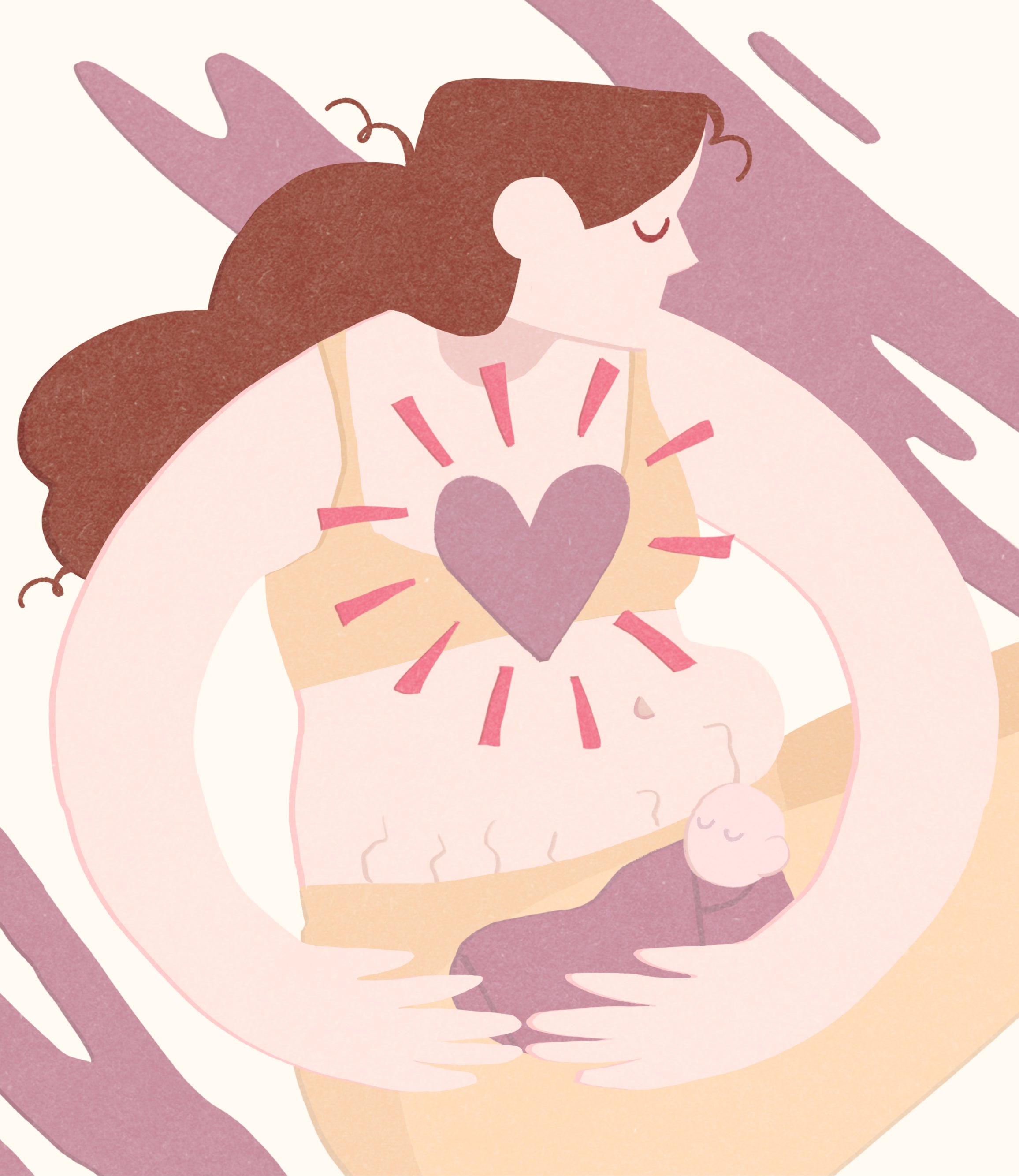
What Really Matters: Expert Tips for Pregnancy, Birth, and Postpartum
Everything you need to know about maternal health during pregnancy, childbirth, and the postpartum period
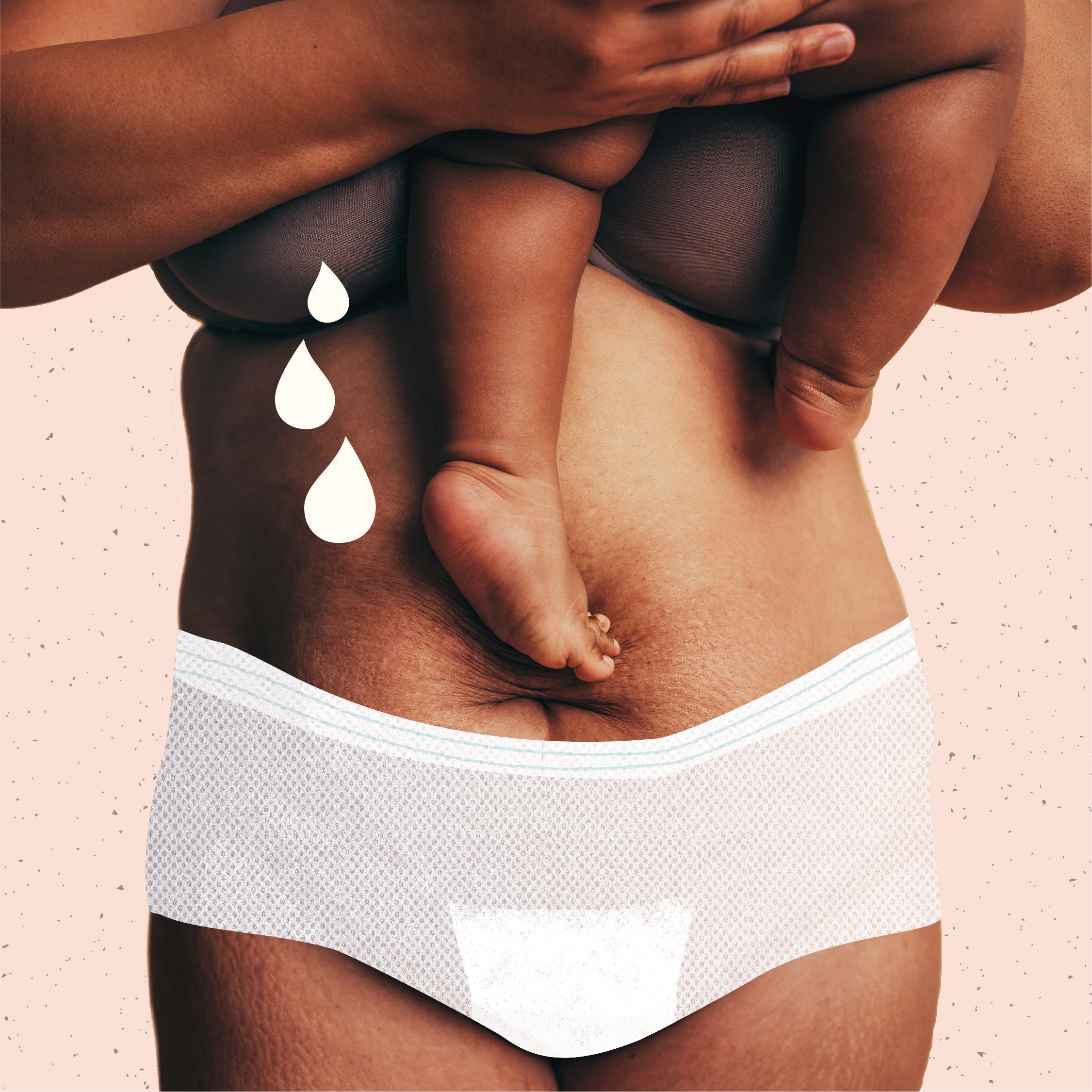
12 things no one told you before about postpartum
The magical, exhausting and simply unique time in the postpartum period is so incredibly important and unfortunately can often be neglected.


