


 Organic Baby Formula Original
 Follow-On Milk 6+
 Follow-on milk
 Organic Infant Formula from Whole Milk
 Follow-on Milk
 Organic Infant Formula from Goat's Milk
 Follow-On Milk
 Organic Bone Broth
 Beef
 For Moms
 Organic Energy Balls


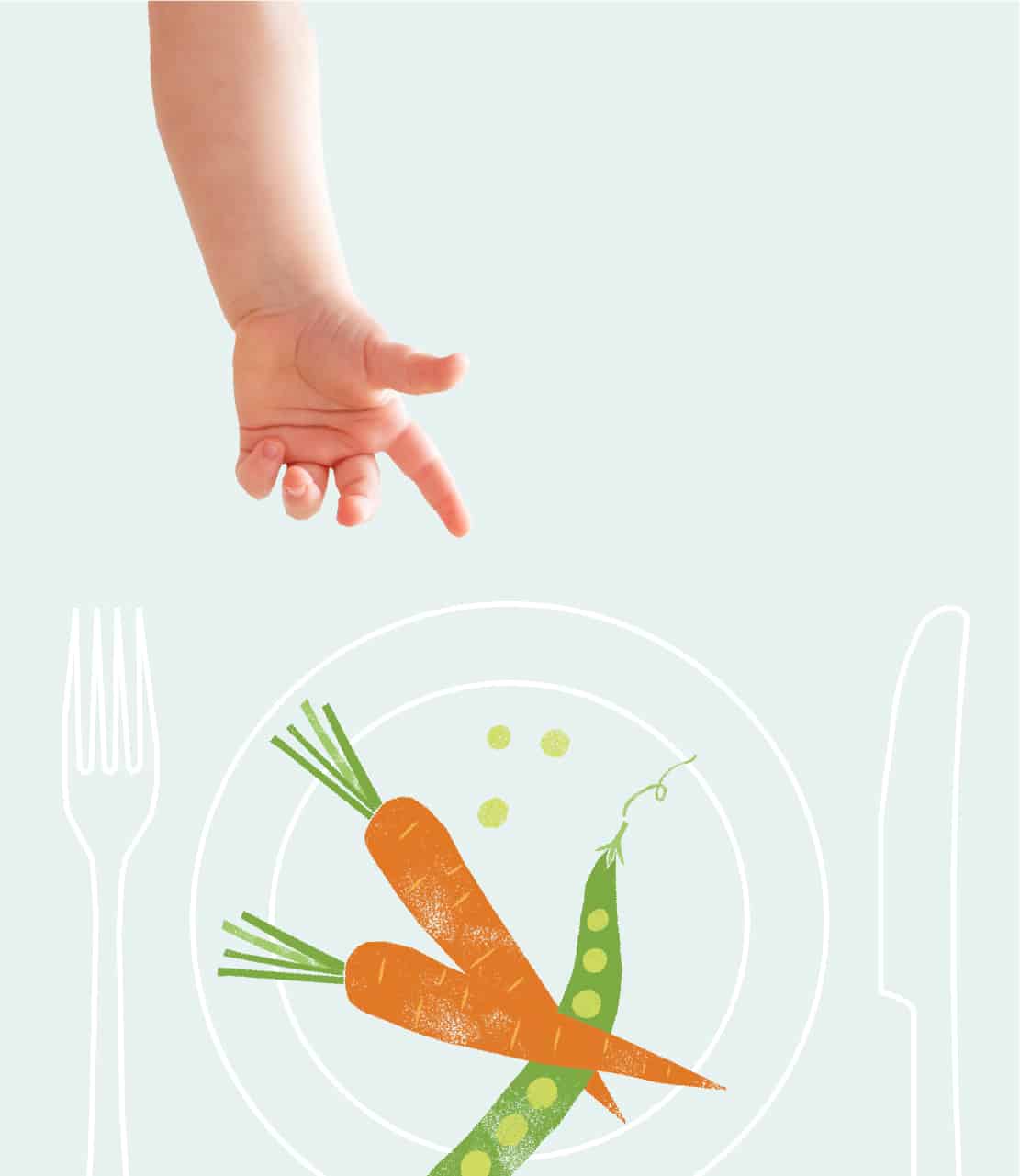
Introducing complementary food: when does it start?
Something new is happening all the time, the first smile, the first grasp or the first look at your food. By then you will probably be wondering when you can give your baby something solid to eat for the first time. When is the right time to start complementary feeding? What types of supplementary food are there?
When can I start introducing solid foods?
During the first few months, your baby only needs breast milk or infant formula. From the 5th month, you can theoretically start introducing solid foods. Why theoretically? Not every baby is ready at that time. Some are very observant very early on and really want to try what you are eating, while other babies are perfectly satisfied with milk. However, by the 7th month at the latest, you should gradually start introducing solid foods, as your baby simply needs more nutrients from that point on. From the 8th month, you can also start using bone broth in your baby's meals. Nevertheless, it is important that the baby has a say in getting started. Click here for the nutrition plan for a baby's first year.
Complementary feeding plan
Introducing solid foods takes time. Depending on your baby's age, you will start introducing purees step by step. You start with vegetable puree for lunch, followed by, for example, cereal for dinner or fruit puree in the afternoon.

5 Signs Your Baby Is Ready for Solid Foods
-
It watches closely as Mom and Dad eat and shows a clear interest in it
-
It reaches for your food
-
With a little support, it can already sit upright
-
When you come with the spoon, it opens its mouth
-
The initial reflex to push the food out of the mouth with the tongue has disappeared
If your child clearly signals to you that it wants to eat solid food, you should consider whether you want to feed purees or whether you prefer to start with the baby-led weaning method (more on that below) or simply combine both methods.
Introducing solid foods with baby food
Baby food can be roughly divided into three groups:
- Vegetable purée,
- Fruit purée, or
- Cereal purée or porridge

Make baby food yourself or buy pre-made?
Whether it's a puree made from vegetables, fruit or cereals - if you cook it yourself, it does take more effort, but you know exactly what's in it. However, the quality of organic fruit and vegetable puree in jars is also so good that you can feed it to your baby with complete confidence - or you can look for other great alternatives such as baby food from the freezer.
You can find cereal purees in the form of instant purees or as baby porridge. The ready-made instant puree simply needs to be mixed with hot water.
Cereal puree to be boiled or baby porridge is a tastier option. Because boiling it enhances the flavour and can encourage babies to enjoy eating.
Here we go with lunchtime porridge
You should have a small spoon, a bowl, and a baby bottle or sippy cup – and then you can get started.
You can start with a vegetable purée at lunchtime, for example carrot, sweet potato, pumpkin, or parsnip. To rule out intolerances or allergies, you should introduce the vegetables to your baby one at a time:
For example, carrot purée in the first week, another vegetable in the second week, and so on. If the vegetables are well accepted, you can add meat to the vegetable-potato purée in the following weeks. Cereal flakes are a very good vegetarian alternative. It is important to make sure that it is whole grain cereal.
Start with a small appetite
Since eating baby food can be tricky at first and more is likely to end up on the bib than in your baby's mouth, your child shouldn't be extremely hungry. They could quickly become impatient and start crying. Being tired is also not a good idea, as eating with a spoon is a new skill to learn and can be very tiring for your baby.
How much baby food per meal?
At the beginning, offering just a few spoonfuls of baby food is enough. If your baby refuses the baby food, do not force them to eat. Introduce it very slowly together.
A little tip: Cook the vegetable purée in advance and freeze it in ice cube trays.
So you don't have to throw away too much baby food, you can freeze the freshly cooked vegetable purée in an ice cube tray. At the beginning, your child probably won't eat more than one ice cube-sized portion.
Complementary feeding according to plan
• Vegetable purée
• Cereal purée without milk
Tip: Start with one vegetable and add new vegetables every 1–2 weeks. This way, you’ll know what your baby tolerates well.
2 weeks later
• Vegetable and potato purée
• Cereal purée with whole milk or plant-based drink, max. 200 ml milk per day
• Cereal and fruit purée
• Vegetable-potato mash (with fish or meat)
• Cereal-fruit mash
• Milk mash or cereal mash with whole milk or plant-based drink, max. 200 ml per day
Tip: Some babies struggle with their digestion when starting solid foods. Mix a little pear mash into the vegetable mash; this can stimulate digestion.
• Porridge with small pieces
Tip: Keep the pieces very small at first and watch your baby to see how they get on with them. They will spit out anything that is too big for them.
• Bone broth for savory porridge meals, soups, or pasta
Bone broth (without added salt!) contains collagen and amino acids.
• Eating like Mom & Dad
If your baby has already had their first experiences with solid meals and has handled them well, you can now start letting them eat normally with the family at the table.
The Baby-Led Weaning Method or Solid Food Without Pacifiers
If you have decided on a baby-led weaning approach, this means that your child will eat what you eat as a family. The same rule applies here: there should be signs that your baby is ready for solid food.
Unlike with the baby food method, you don't have to follow a specific order here. Your child can simply sit at the family table and eat with everyone. Steamed vegetable and fruit sticks are a good start, but plain bread or waffles (of course without sugar or honey) usually work well too. Make sure to salt the food only after you have taken out your baby's portion.
Your baby should feed themselves with their hands as much as possible. Prepare for a bit of a mess, as your baby will very likely want to play with the food too. Basically, feel and taste it.
Since your baby can easily choke, you should not leave them unattended while eating. Often, the little ones will simply spit out pieces that are too large.
Read on ...
Related Articles
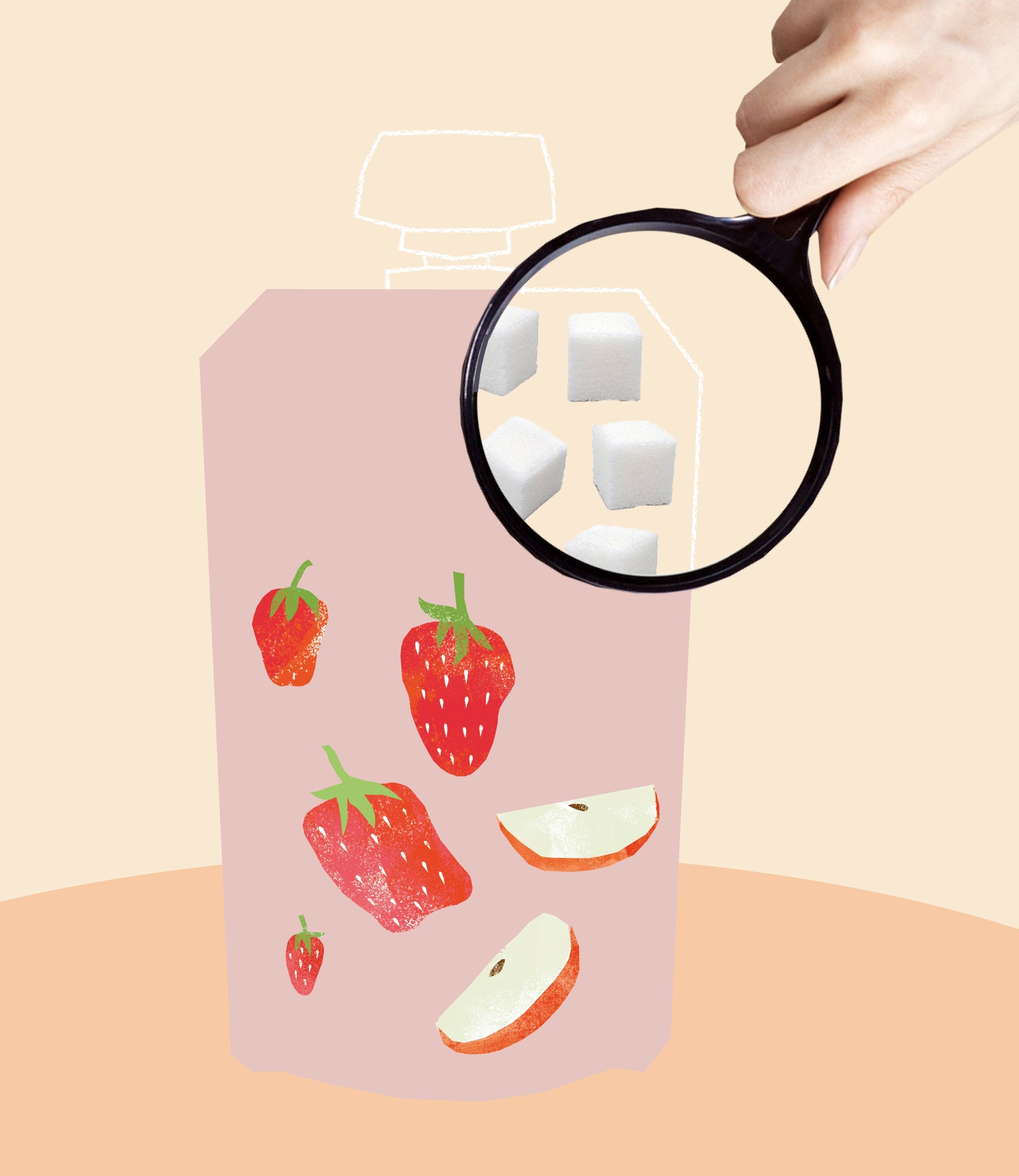
Sugar and babies: How much sugar is in a squeeze pouch?
100 ml of fruit puree pouch contains more sugar than 100 ml of Coca Cola. So why should fruit puree from drinking pouches be healthy?
Your Baby's First Evening Porridge
When do you start with the evening porridge? At what time? Which type of grain and which liquid are best to use?
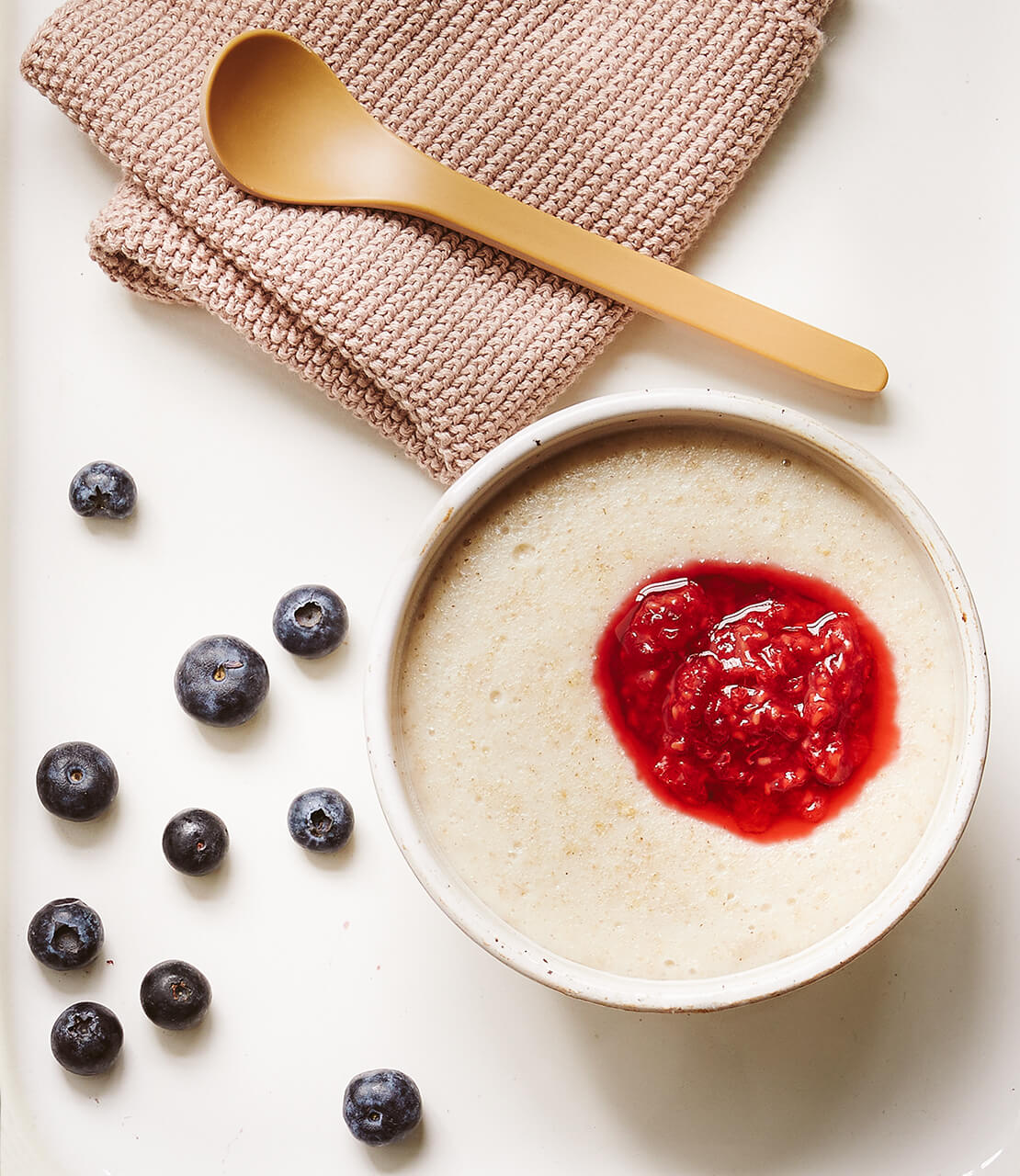
Making Baby Food at Home: Cereal Recipe Ideas with Fruit and Vegetables
Baby food also tastes delicious with seasonal vegetables. Take 5 to 15 minutes to conjure up a cereal porridge or oatmeal for your baby.


