Organic Baby Formula Original
 Follow-On Milk 6+
 Follow-on milk
 Organic Infant Formula from Whole Milk
 Follow-on Milk
 Organic Infant Formula from Goat's Milk
 Follow-On Milk
 Organic Bone Broth
 Beef
 For Moms
 Organic Energy Balls


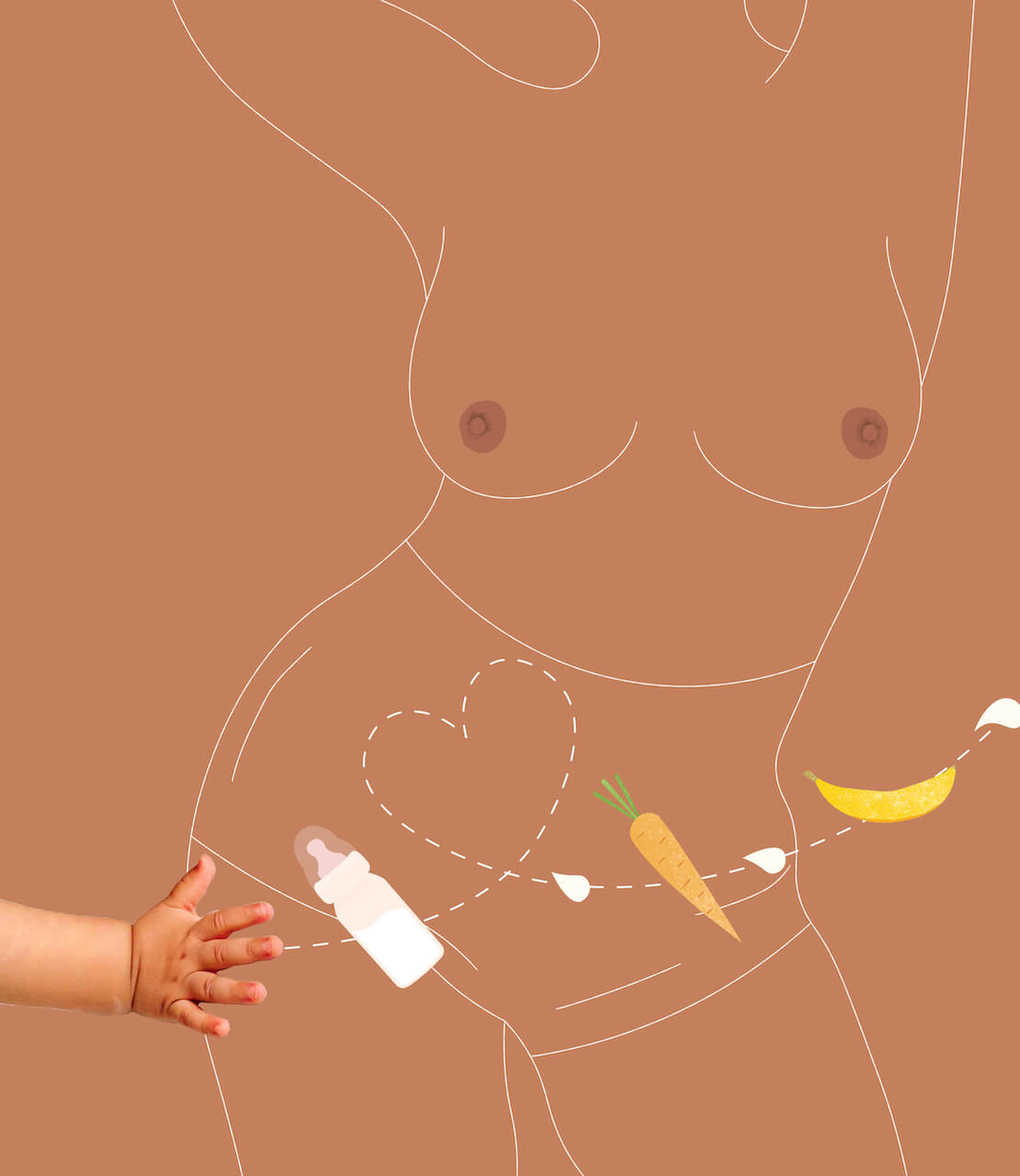
When and how does weaning actually work?
Weaning, a topic that many mothers encounter again and again. And then suddenly the time has come. However, the right time can depend on so many things. Hopefully, you and your baby will play the main roles in this and you won't let yourselves be too much influenced by external circumstances. In the article we address the following questions:
Is there a right time for weaning and how does it work? What do other mothers actually report?
|
An important note right at the outset: The WHO recommends exclusive breastfeeding for at least six months and gradually introducing complementary foods only after the sixth month. The European Institute for Breastfeeding and Lactation also recommends breastfeeding for six months and – depending on the baby's developmental stage – starting complementary foods no earlier than the fifth and no later than the seventh month of life. |
Weaning from breastfeeding is divided into two groups: primary weaning shortly after birth and secondary weaning at a later time. Primary weaning usually takes place in the hospital. After consulting with your doctor, you will be given a medication there that suppresses milk production. You can discuss the decision of whether you want to stop breastfeeding immediately in peace with your doctor, your midwife, and a person you trust.
Next is secondary weaning, i.e., weaning after a certain period of breastfeeding.
Is there a time when I should stop?
At the very latest, when the seller at the kiosk around the corner tries to convince you that you should only start weaning your baby after two years, it becomes clear: something is wrong here. The decision to wean concerns you and your baby. However, it seems that people who have absolutely nothing to do with your breastfeeding journey keep interfering. Most importantly: don't let yourself be swayed! If you are still unsure, talk to your midwife or doctor.
In September 2021, we conducted a survey among mothers who had started or completed weaning their baby. We asked about their experiences with weaning – including how old the baby was when weaning began. The answers were varied: everything from newborn to two years and older was represented. The most frequently mentioned age was five to six months. This is within the timeframe recommended by the European Institute for Breastfeeding and Lactation for starting solid foods. Important: However, this does not necessarily mean that a baby must be completely weaned from the fifth month.

There is no real predictable time to start weaning. Looking back, the child or the mother more or less decides the timing of weaning. Weaning can be completed in a few days to weeks or can also take several months. By the way, there is a link to the survey results at the end of the article.
Frequently cited reasons for weaning are:
-
The baby has started reaching for solid food or has begun refusing the breast
-
Return to work
-
The need to take medication
-
Another pregnancy
-
The mother's conscious decision to end breastfeeding
A return to work and another pregnancy do not mean that you have to stop breastfeeding. Maternity protection also applies at the workplace. You are entitled to at least one hour per workday during which you can breastfeed or pump your little one. Breast milk continues to flow even when you are pregnant. However, both situations can lead to you weaning on your own. More on this below.
How do I stop breastfeeding?
Now let’s turn to the “how.” How do you actually stop breastfeeding? As already mentioned, the baby or the mother initiates the weaning process either of their own accord or due to other external influences.
Weaning by the baby
If a baby refuses the breast or reaches for solid food, it may be a sign that the baby no longer wants to be fully breastfed.
A quick side note: Perhaps your baby also doesn't want your breast for just a short period because you have changed your shampoo or shower gel, or your baby has a cold? So watch your little one and try to rule out external influences. During this time, for example, you can pump milk so that the milk supply does not dry up.
Weaning by the mother
When the time comes to decide that you are ready to wean, there are several methods.
Generally, midwives like to emphasize that the baby’s sucking or pumping with a breast pump stimulates milk production. The same is true in reverse: if you suckle or pump less, you will also produce less.
It can be helpful not to let your baby drink the breasts completely “empty,” but only until the pressure in your breasts subsides. For the first few days, continue nursing as usual several times a day until you can then reduce the frequency.
One objection to this approach is that your baby might start crying if they are not allowed to finish drinking. Another approach, therefore, is to let your baby finish drinking and replace the next feeding with a bottle. If your milk wants to come out at the next feeding, you can pump it until the pressure subsides or express the milk into the sink. Once you are ready, gradually reduce nursing to twice or once a day until your baby is weaned.

There is a method by Gordon in which weaning from breastfeeding is completed in 10 nights. At night, a seven-hour break from feeding is introduced, and the baby is very gently weaned. Caution: This does not mean that your baby will sleep through the night. Restless phases occur from time to time. According to Gordon, however, these become less and less frequent, and your baby gradually gets used to the long break from feeding.
Some mothers completely wean their baby in just a few days, while others may need four weeks or even months. In our survey, 50% of the mothers surveyed took up to four weeks to completely wean their baby. Other mothers in our survey were either still breastfeeding or took longer—even 6 months or more—to wean.
Aids for weaning?
There are a few tips and tricks that can make weaning easier for you.
Regularity
To avoid engorgement or mastitis, it is also worth maintaining a regular routine. For example, nursing at longer intervals, until you perhaps only nurse in the morning and afternoon and replace the remaining meals with a bottle or baby food. And take your time.
“Very gradually… drink fennel tea, gently express just enough milk when feeling engorged, and apply cold compresses. After a few days, milk production will gradually decrease and soon stop completely”
Jasmin Kraftzig, midwife from Hamburg
Cooling
One trick to minimize milk production is to cool your breasts after nursing. Cold compresses or cottage cheese wraps work wonderfully.
Tea
You can also stop drinking your lactation tea and switch to sage or peppermint tea. Both teas are said to inhibit milk production.
Bottle-fed
In our survey of mothers who had started weaning their babies off the breast, Pre formula or follow-on milk was often mentioned as an important aid. After all, when you are breastfeeding less, you can replace meals with a bottle filled with formula. This way, you don't lose that special bonding time during feeding.
Packing a suitcase
Hand over the bottle with formula or breast milk to your partner and treat yourself to a few days off: no nursing, pumping, or bottle-feeding. Even if you take your partner and baby with you, just changing your surroundings can make the transition easier.
By the way, if you are interested in the introduction of solids, feel free to browse our magazine. We have also published baby porridge recipes for you here.
Hormone changes after breastfeeding?
In our survey on weaning, almost 50% of mothers agreed that they had underestimated the hormonal shift. The hormonal shift is clearly one of the difficulties when weaning.
You have probably heard of the so-called bonding hormone oxytocin. This hormone is produced in your body during breastfeeding. When you wean, its production decreases. As a result, you may quickly start to feel emotionally alone. This feeling can develop into feelings of loss and grief.
Especially if you have suffered from or are currently suffering from postpartum depression, it is best to seek help right away and get psychological support through the weaning phase.
The hormonal adjustment is usually complete with the onset of your first period after weaning. So, about two months after you have finished weaning.
To make weaning as pleasant as possible, you do not have to break the close physical bond with your baby. Even if you are no longer fully or at all breastfeeding your baby, there are plenty of opportunities for direct skin contact: cuddling naked in bed, bathing together in the bathtub, using a baby carrier, etc.
Can I continue breastfeeding if I want to get pregnant again?
The answer is a very clear yes, of course! Even if you become pregnant again, you can continue to breastfeed your baby. However, your baby will probably start rejecting your breast on its own at a certain point in your pregnancy. Because your hormone levels will change, the taste of your milk will also change, and your baby will stop nursing on its own.
Do I have to quit if I want to go back to work?
Although maternity leave exists and you should also be entitled to the option from your employer to pump milk for your baby at work, the situation in German offices is usually far from ideal. So if you are at work and cannot pump or breastfeed for an extended period, your milk supply will naturally decrease. This is how you automatically stop breastfeeding.
The most important points summarized briefly:
-
When do you start? The time when you begin weaning is a decision that concerns you and your baby. Don't let anyone talk you into it, and take as much time as you and your baby need.
-
Reasons for weaning: Weaning is initiated by the mother or the baby.
-
How to wean? In the first step, you reduce the duration of breastfeeding and in the second step, the frequency of breastfeeding.
-
Aids for weaning: Regularity, breast pump, pumping out, cooling, sage or peppermint tea and baby formula, cuddling and taking time.
-
The hormonal adjustment during weaning is often underestimated. Take your feelings seriously and talk about it with someone you trust.
Finally, three anonymous quotes from mothers in our 2021 Löwenzahn Organics Survey on weaning:
“It’s simply none of anyone else’s business but the mother’s and the baby’s! Breastfeeding is a relationship that only the people mentioned above are a part of! You should never let anyone make you doubt yourself! Whether you breastfeed, how long you breastfeed… I really hate all the pronouncements on this from ‘super-mums’! Women need to stick together!!”
“I didn’t think it would be so emotionally difficult to stop breastfeeding and switch to bottle-feeding. I originally wanted to exclusively breastfeed, but after my daughter didn’t learn how to latch properly, I unfortunately had to stop. The pressure to breastfeed is intense. The phrase ‘breast milk is best for your child’ alone—fine and all, but it always made me feel bad, because I really wanted to breastfeed but just couldn’t.”
“Stopping breastfeeding should never happen because of outside pressure. As long as the breastfeeding relationship is going well, I see no reason to end it prematurely and against the child’s wishes.”

Related Articles

How babies learn to drink is important
Learning to drink is also related to jaw, teeth, and speech development. In an interview with an expert.

Let's get cooking: Bone Broth Recipes
Bone broth is a great accompaniment to hearty meals. Let our recipe ideas inspire you.
Into the bowl: Bone broth for your baby
We've received another addition to our product range: Organic Bone Broth can support and promote gut health through its naturally occurring collagen.